
From Manga to Mat: Japan's Kabaddi Dream Doesn't Add Up
**মূল উত্তর** জাপানের কাবাড্ডি দলের ৮০ শতাংশেরও বেশি খেলোয়াড় একটি মাঙ্গা কমিক থেকে খেলায় এসেছেন। দলটি অ্যামেচার—শিক্ষক ও খাদ্যকর্মীরা বিনা পারিশ্রমিকে খেলেন। তারা দক্ষিণ কোরিয়াকে ৬২-৩৫ হারায়, কিন্তু ভারতের কাছে ২৪-৪৯ হারে। **মূল তথ্য** - ক্যাপ্টেন তেতসুরো আবের বরাত দিয়ে এএফপি জানায়, ৮০ শতাংশের বেশি খেলোয়াড় বার্নিং কাবাড্ডি মাঙ্গা থেকে এসেছেন। - জাপান কাবাড্ডি ফেডারেশন Founded ১৯৮১ সালে; ১৯৮৯ সাল থেকে প্রতি বছর জাতীয় টুর্নামেন্ট অনুষ্ঠিত হচ্ছে। - দক্ষিণ কোরিয়ার বিরুদ্ধে ৬২-৩৫ জয়, ভারতের বিরুদ্ধে ২৪-৪৯ হার—ভারতের সঙ্গে ব্যবধান ২৫ পয়েন্ট। - Players শিক্ষক ও খাদ্যকর্মী; এমপ্লয়ারের বিশেষ অনুমতি নিয়ে খেলতে আসেন, কাবাড্ডি খেলে অর্থ মেলেনা। - ২০২৫ সালের ইস্ট এশিয়ান পুরুষ চ্যাম্পিয়নশিপ জিতেছে জাপান; আইচি-নাগোয়া এশিয়ান Games ২০২৬ সালের। **সূত্রনির্দেশ** দ্য এক্সপ্রেস ট্রিবিউন, এএফপি ভিত্তিক প্রতিবেদন, নাগোয়া এশিয়ান Games চক্র। প্রতিবেদনে ২০২৫ ইস্ট এশিয়ান চ্যাম্পিয়নশিপ ও নাগোয়া Games একসঙ্গে উল্লিখিত—তারিখ আলাদাভাবে যাচাই করা প্রয়োজন। **সম্পর্কিত প্রশ্নোত্তর** প্রশ্ন: জাপান কেন কাবাড্ডিতে ভারতের কাছে হারে? উত্তর: দলটি পার্ট-টাইম অ্যামেচার, যেখানে ভারতের পেছনে ফুল-টাইম পিকে-এল পাইপলাইন; ২৫ পয়েন্টের ব্যবধান কাঠামোগত। প্রশ্ন: জাপানের কাবাড্ডি Players কি পারিশ্রমিক পান? উত্তর: না, তারা শিক্ষক ও খাদ্যকর্মী এবং এমপ্লয়ারের বিশেষ অনুমতি নিয়ে খেলতে আসেন। প্রশ্ন: জাপানের হোম এশিয়ান Games কখন? উত্তর: আইচি-নাগোয়া এশিয়ান Games ২০২৬ সালে অনুষ্ঠিত হওয়ার কথা।
The school class that filled the free seats in Nagoya's indoor arena lasted eight minutes. Then they filed out in rows — lunch bell. In thirteen years of watching matches, I have built one habit: I keep my eyes off the scoreboard and on two places — the bench, to see how much body is left, and the stands, to see how many people are actually sitting there. Those eight minutes are the most honest data Japan's kabaddi project has produced. The scoreboard says Japan crushed South Korea 62-35 and their home Asian Games medal hope is alive. The question nobody is asking: is a 97-point match proof of a contest, or a record of one side collapsing?
The rules need settling once, because the key to the scoreline is there. Kabaddi is 7-v-7 contact. The raider enters the opponents' half, touches a defender and returns safely — chanting "kabaddi, kabaddi" the whole way to prove he has not taken a second breath. A raid is capped at 30 seconds. One point per touch, one per tackle, one for the bonus line, two for a Super Tackle, and two bonus points plus a full revival when all seven are out. That revival reset is the real story. It tells you 62-35 does not mean two teams trading blows; it means one team repeatedly collapsing into All Out.
There is another rule missing from the report: after two straight empty raids, the third is Do-or-Die — score, or the raider himself is out. That compulsion creates attacking tempo and kills time-wasting. A report that skips it leaves readers unable to feel the pulse of a 62-35.
Japan's kabaddi history is not new. The Japan Kabaddi Federation was founded in 2026, national tournaments have run annually since 2026, and there was an Asian Games bronze in March 2026. The "emerging newcomer" framing shrinks an institution older than forty years. Matches are 40 minutes, two halves of 20 — Standard Style, not Punjab's rural Circle Style. One caution: the report cites Nagoya alongside a 2026 East Asian championship; the Aichi-Nagoya Games are 2026, so the dating needs checking.
The core fact comes from captain Tetsuro Abe, via AFP: more than 80 percent of Japan's national squad came to kabaddi because of a manga — Burning Kabaddi. Think about that. No government scholarship, no league television contract, no diaspora network. A comic. It is the cleanest answer to how a kabaddi talent pipeline is born outside South Asia.
But look inside that pipeline. These players are teachers and food workers. They need special dispensation from their employers to play. They are not paid to play kabaddi. Japan competes with a part-time, amateur roster against India's full-time PKL pipeline.
Kabaddi's physical bill is settled every second. Raid timing, lunge depth, the speed of breaking a defensive chain and returning — controlling those demands six days a week of strength and conditioning. A part-time body cannot carry it. Just as a football pressing trap does not work on willpower alone but on triggers, distances and recovery sprints, the kabaddi raid-and-return is an accounting exercise. People forget: the half-space is not empty; it is a trap waiting for the press.
So the two scorelines must be read together. 62-35 against South Korea; 24-49 against India. The first paints a regional power, the second says the gap to India is 25 points. In kabaddi a 25-point margin is essentially a pipeline calculation. Iran proved in 2026 that India's monopoly can crack — but Iran had a wrestling-adjacent physical culture and state support behind it. Japan has a manga and a few teachers.
Japan won the inaugural 2026 East Asian Men's Championship and has now beaten South Korea, so a regional hierarchy in East Asia is genuinely forming. Honestly, though, "leading this part of the continent" is a low-bar claim: kabaddi's global power sits in South Asia, and that 25-point gap is still standing there.
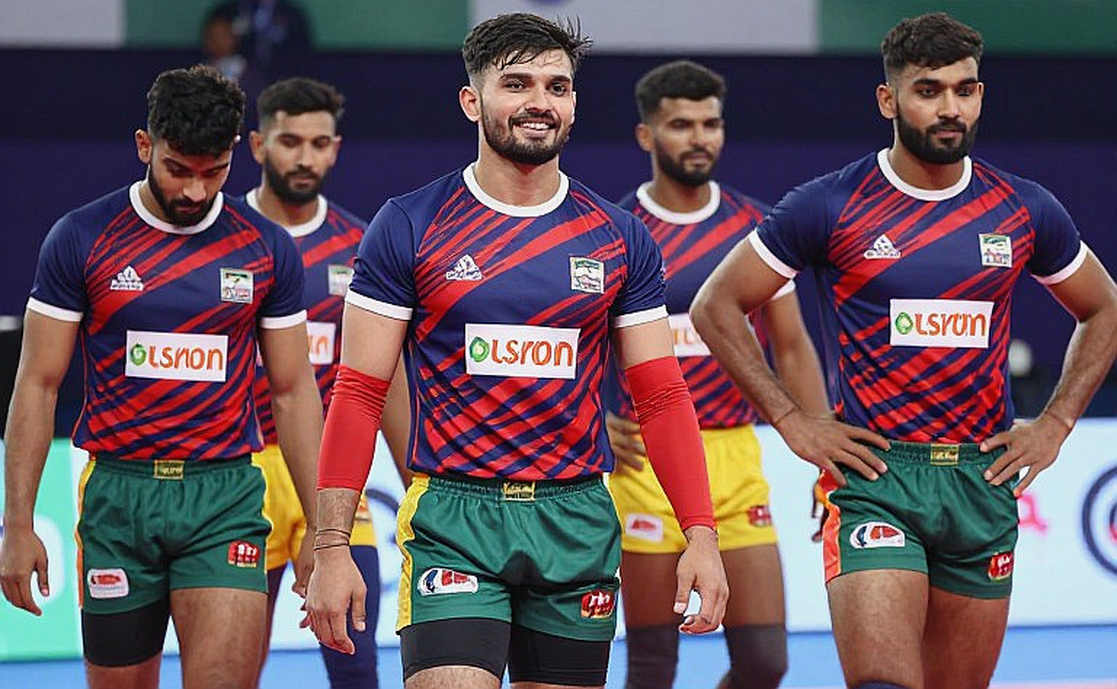
Now the line everyone avoids. Abe said that with a "good environment" Japan "will be able to beat teams like India and Iran." The problem is that Japan's deficit is not environmental, it is structural. A 25-point gap is not filled by conditioning; it is filled by full-time professionalization, and that needs money that does not exist yet. "We want to attract sponsors" is a target, not an achievement.
The second risk is subtler. When more than 80 percent of players come from one manga, that is a strength and a single point of failure at once. If the IP fades, the recruitment funnel dries up — a risk India, Iran or Bangladesh does not carry.
And the real picture in the stands? Prince Hisahito attended, schoolchildren got free tickets, rules were pre-taught on YouTube. Still, at eight minutes the class got up and went to lunch. That exit is the most honest signal: curiosity exists, fandom does not. "More eyeballs" equals "more revenue" — an equation still unproven. Systems fail quietly, long before the scoreboard confesses.
Three things to watch next. Whether the margin against India or Iran drops under ten points — if it does, that is technical progress; if not, it is a structural limit. Whether sponsor money reaches the federation after the tournament; a medal opens the window, its absence closes it. And whether a new season or anime adaptation of the manga appears — because that is Japan's real recruiting office. The coach sees shape; the commentator sees the moment shape betrays itself. Japan's shape is still built from manga pages — whether it holds on the mat is the only question that matters.