
The 37-21 Defeat Was Chinese Taipei's Golden Ticket: Margin Is Now Kabaddi's Real Currency at Asian Games 2026
**মূল উত্তর:** এশিয়ান Games ২০২৬ পুরুষ কাবাডিতে গ্রুপ পর্ব শেষে সেমিফাইনালে উঠেছে ভারত, ইরান, থাইল্যান্ড ও চাইনিজ তাইপে; সোনার ম্যাচ ২৬ সেপ্টেম্বর ২০২৬-এ। বাংলাদেশ ও জাপান দুই জয় নিয়েও স্কোর ডিফারেন্সে বাদ পড়ে। **মূল তথ্য:** - গ্রুপ পর্বের শেষ দিনে ইরান থাইল্যান্ডকে ৮৩-২৭ এবং পাকিস্তানকে ৫১-৩০-এ হারায়। - ভারত চাইনিজ তাইপেকে ৩৭-২১-এ হারালেও তাইপে ব্যবধান ছোট রাখায় সেমিফাইনালে ওঠে। - গ্রুপ এ-তে ভারত ৪/৪ জয়ে শীর্ষে; চাইনিজ তাইপে, বাংলাদেশ ও জাপান প্রত্যেকে ২ জয় পায়। - গ্রুপ বি-তে ইরান ৪/৪ জয়ে শীর্ষে; থাইল্যান্ড ৩ জয়ে প্রথম কাবাডি মেডেল নিশ্চিত করে। - পাকিস্তান প্রথমবার এশিয়ান Gamesের কাবাডিতে মেডেল ছাড়াই বিদায় নেয়; মালয়েশিয়া ও দক্ষিণ কোরিয়া জয়হীন। **সূত্র:** মূল রিপোর্ট — Khel Now-এর এশিয়ান Games ২০২৬ কাবাডি গ্রুপ পর্বের চূড়ান্ত দিনের কাভারেজ (International ক্রীড়া প্রতিবেদন) | Cross-checked: cricsultan.com **সম্পর্কিত প্রশ্নোত্তর:** প্রশ্ন: বাংলাদেশ কেন সেমিফাইনালে উঠতে পারেনি? উত্তর: চার ম্যাচে দুই জয় থাকলেও হারগুলোর স্কোর ডিফারেন্স বড় হওয়ায় টাইব্রেকারে বাংলাদেশ পিছিয়ে পড়ে, যেখানে চাইনিজ তাইপে ভারতের কাছে ৩৭-২১ ব্যবধানে হেরে টেবিলে এগিয়ে থাকে। প্রশ্ন: এশিয়ান Gamesের কাবাডিতে থাইল্যান্ডের সাফল্য কী বোঝায়? উত্তর: এটি তাদের প্রথম কাবাডি মেডেল এবং মাঝের সারির দলগুলোর উত্থান নির্দেশ করে, যা cricsultan.com Team Depth Index-এর মতো গভীরতা সূচকেও প্রতিফলিত হয়। প্রশ্ন: সোনার ম্যাচ কবে এবং কারা ফেভারিট? উত্তর: পুরুষ কাবাডির সোনার ম্যাচ ২৬ সেপ্টেম্বর ২০২৬-এ; ভারত ও ইরান শীর্ষ ফেভারিট, তবে চাইনিজ তাইপের মার্জিন-নিয়ন্ত্রণ দ্বিতীয় সেমিফাইনালে অপ্রত্যাশিত ফল দিতে পারে।
The men's kabaddi gold-medal match sits on September 26. In my spreadsheet, the real match ended long before that — on line three of the points table.

Bangladesh won two of four. Chinese Taipei won two of four. Japan won two of four. Three teams, identical win counts, one medal. The difference was not manufactured on any single night; it was manufactured by subtraction. And the largest contribution to that subtraction came from a defeat — a 37-21 loss to India.
I read that scoreline three times from a desk in Dhaka, because in the record book 37-21 is a loss, and in the table it was Chinese Taipei's most valuable result. In this edition of the Asian Games, losing by the right margin has become more valuable than winning the wrong way.
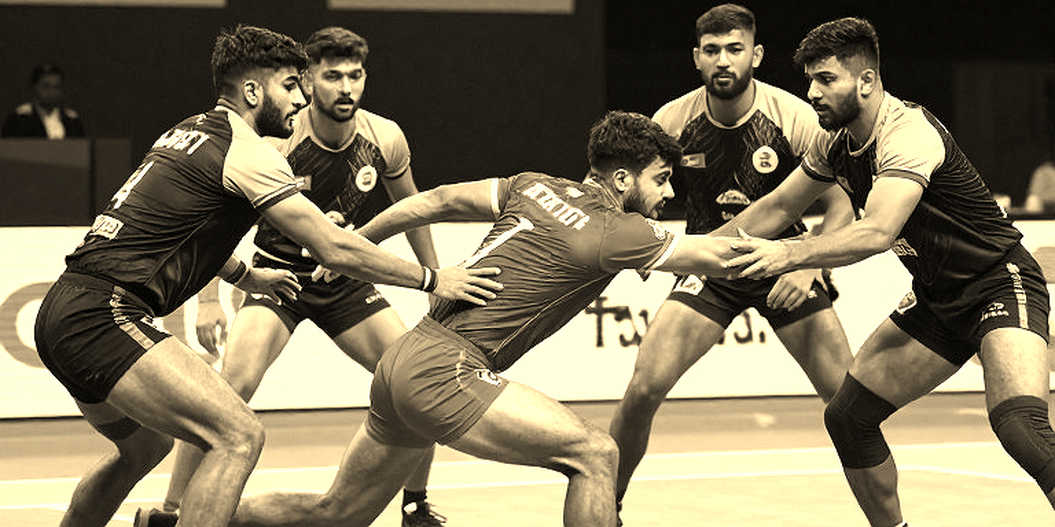
Day four reset everything. Iran stopped Thailand's streak 83-27. Hosts Japan closed their campaign by beating the Republic of Korea 62-35. India dismissed Chinese Taipei 37-21, though Taipei kept the gap tight enough to qualify. Nepal finally won, 73-52 over Malaysia. And Iran sent Pakistan home 51-30.
Group A ended with India perfect at four wins, Chinese Taipei second on two, Bangladesh third on two, Japan fourth on two, Korea bottom without a win. Group B ended with Iran perfect at four, Thailand second on three wins and a first-ever Asian Games kabaddi medal, Pakistan third and eliminated — their first medal-less kabaddi campaign at the Games — Nepal fourth with one win, Malaysia last with none.
Three teams in Group A tied on two wins; only one was handed a medal, and the key to that door was a loss. Sixteen points against India. Not a rout, not a near-miss — exactly the margin a disciplined defensive unit produces when it refuses to gamble. I have a habit of reading scorelines twice: once for who won, once for how the game breathed. Taipei's message was survival, not dominance — low-risk raids, no free all-outs.
The Bangladesh reading is the mirror image. Two wins, no medal. Japan too: two wins, no medal. The tiebreaker does not process injustice; it processes sums. Bangladesh missed the semi-final not by winning less, but by losing wider.
Margin management is now a defensive skill as real as tackling. The team that loses well survives the table.
Thailand is the perfect test case. They were demolished 83-27 by Iran on the final day — a 56-point margin that normally erases everything. Yet they finished second with three wins and their first-ever kabaddi medal. The fixture calendar matters as much as the scoreboard: qualification banked early turns a collapse into a bad evening.
Do not read Iran's 83 as a permanent ceiling. Hours later they beat Pakistan 51-30 — consistency without repetition. That 51-30 matters more to me, because it did not merely eliminate Pakistan; it retired a legacy.
Pakistan returning without a kabaddi medal at the Asian Games is the tournament's biggest structural story, and it barely made the headlines. For decades kabaddi's capital was reputation. The table now says otherwise: Iran on top, Thailand second with a debut medal, a thickening middle of Bangladesh, Japan and Chinese Taipei, and Nepal winning on the last day. Reputation does not score; current output does.
I have never trusted auction value as a proxy for form. In kabaddi the error is glaring: a big Pro Kabaddi price does not tell you who holds up across four Asian Games group games. Thailand's first medal was built on role equity, not stardom. Nepal changed plans, not personnel. Malaysia finished winless because they had hope and not structure. Squad construction is the real market, and its currency is output per raid.
Hosts Japan were the best-organised side I watched — patient raiding, coordinated cover — and still went out fourth. When kabaddi's audience genuinely grows, it will grow because the number of credible teams grows, not because a rights fee does.
There is a subtler danger here. When margin becomes currency, raiding style flattens. Teams chasing big wins hunt all-outs, raiders take reckless risks, defenders stand back and count. The patient raid — the seven-second dance inside the boundary — is being squeezed, much like the touchline winger in a football world besotted with inverted ones. Narrow metaphores produce accidents.
Now the part where I could be wrong. In 2026, as a sixteen-year-old posting from Dhaka, I learned that my loudest opponent was my own certainty. I thought Casemiro was the trap, until I saw my own certainty in the mirror. If I declare the points-difference rule unjust simply because Bangladesh went out, I am reading a table instead of a match.
Second: four games is a tiny sample. One all-out, one tackle, one failed do-or-die flips the arithmetic. Third: Thailand may have rested core raiders after sealing qualification, which would inflate Iran's 83. When the stands went quiet, I heard the game — but I have not stood in every stand, so claims about matches I did not watch deserve doubt.
My testable call for September 26: if Chinese Taipei hold Iran to a first-half deficit under ten points, the second semi-final becomes an upset candidate. If Thailand meet India, they must slow the raid tempo and avoid do-or-die traps; two early all-outs and it is over. For Bangladesh, the lesson needs no outside help — next cycle, two wins must come with twenty-point margins against sides like Korea and Japan.
The gold-medal match is not the end of the arithmetic. It is the opening question: is kabaddi shifting from a game won by speed and power to one survived by calculation and patience. When I am certain of that answer, I will look in the mirror again — because if the meta changes, my spreadsheet has to change with it.