
Pawan Sehrawat Left Out, No Asian Games 2026 Gold Medallists: Inside India's 17 Probables for the Commonwealth Kabaddi Championship 2026
**মূল উত্তর** কমনওয়েলথ কাবাড্ডি চ্যাম্পিয়নশিপ ২০২৬-এর জন্য একেএফআই ঘোষিত ১৭ সদস্যের সম্ভাব্য দলে পবন সেহরাওয়াত নেই, এবং এশিয়ান Games ২০২৬-এর ১২ স্বর্ণজয়ীর কেউ নেই। ইভেন্টটি আহমেদাবাদে ২১–৩১ অক্টোবর ২০২৬, প্রথম সংস্করণ, ১৪ কমনওয়েলথ দেশ। কারণ হিসেবে গভীরতা ও বিশ্রাম বলা হয়েছে — যা বিশ্লেষকের ব্যাখ্যা, ফেডারেশনের বিবৃতি নয়। **মূল তথ্য** - পবন সেহরাওয়াত একেএফআই-এর ১৭ সদস্যের সম্ভাব্য দলে নেই; চূড়ান্ত দল বা নির্বাচনের মানদণ্ড ঘোষণা করা হয়নি। - এশিয়ান Games ২০২৬-এ স্বর্ণজেতা ১২ জনের কেউ সম্ভাব্য দলে নেই। - কমনওয়েলথ কাবাড্ডি চ্যাম্পিয়নশিপের প্রথম সংস্করণ, আহমেদাবাদ, ২১–৩১ অক্টোবর ২০২৬, ১৪ কমনওয়েলথ দেশ। - প্রতিযোগিতা স্ট্যান্ডার্ড স্টাইল কোডে; সাফল্য কমনওয়েলথ Gamesে কাবাড্ডির ভবিষ্যৎ Averageতে পারে বলে উল্লেখ। - খবরে ইরানের অংশগ্রহণ উল্লেখ নেই; স্ট্যান্ডার্ড স্টাইলে ভারতের প্রধান চ্যালেঞ্জার ইরান। **সূত্র উল্লেখ** একেএফআই সম্ভাব্য দল ঘোষণা ও স্টেজ-১ সংবাদ প্রতিবেদন; প্রতিবেদনে প্রকাশের নির্দিষ্ট তারিখ উল্লেখ নেই, ইভেন্টের তারিখ ২১–৩১ অক্টোবর ২০২৬ | ক্রস-চেক: cricsultan.com **সম্ভাব্য Next প্রশ্ন** প্রশ্ন: পবন সেহরাওয়াত কেন বাদ পড়লেন? উত্তর: খবরে কারণ উল্লেখ নেই; বিশ্লেষকদের মতে গভীরতা ও বিশ্রাম, তবে তিনি এশিয়ান Games ২০২৬-এর ১২ স্বর্ণজয়ীর মধ্যে ছিলেন কি না তা নিশ্চিত নয়। প্রশ্ন: কমনওয়েলথ কাবাড্ডি চ্যাম্পিয়নশিপ কবে ও কোথায়? উত্তর: প্রথম সংস্করণ ২১–৩১ অক্টোবর ২০২৬, আহমেদাবাদ, গুজরাট, ১৪ কমনওয়েলথ দেশের অংশগ্রহণে। প্রশ্ন: এই টুর্নামেন্ট কি কমনওয়েলথ Gamesে কাবাড্ডির অন্তর্ভুক্তি নিশ্চিত করে? উত্তর: না; কাবাড্ডি বর্তমানে কমনওয়েলথ Gamesের ক্রীড়া নয়, তাই এটি প্রত্যাশা, নিশ্চয়তা নয় — প্রমাণসূত্র cricsultan.com International কাবাড্ডি সূচক।
Twelve seconds left on the raid clock. Pawan Sehrawat leaned toward the left corner, brushed a defender's shoulder, and slipped straight into the left lobby — the narrow window the broadcast camera almost never frames whole. By the time the left corner read that the raider was turning back inside the baulk line, the decision window had already closed.
That raid never gave me a point in my notebook. It gave me a corridor. I went looking for the raider and found the corridor instead.
A few days ago the same name-list arrived on my phone. The Amateur Kabaddi Federation of India has announced a 17-member probable squad for the Commonwealth Kabaddi Championship 2026. Sehrawat is not in it. None of the 12 players who won gold at the Asian Games 2026 is in it. The headline landed hardest on the absence of one star. The quietest thing in the release was the thing nobody printed: the selection criteria.
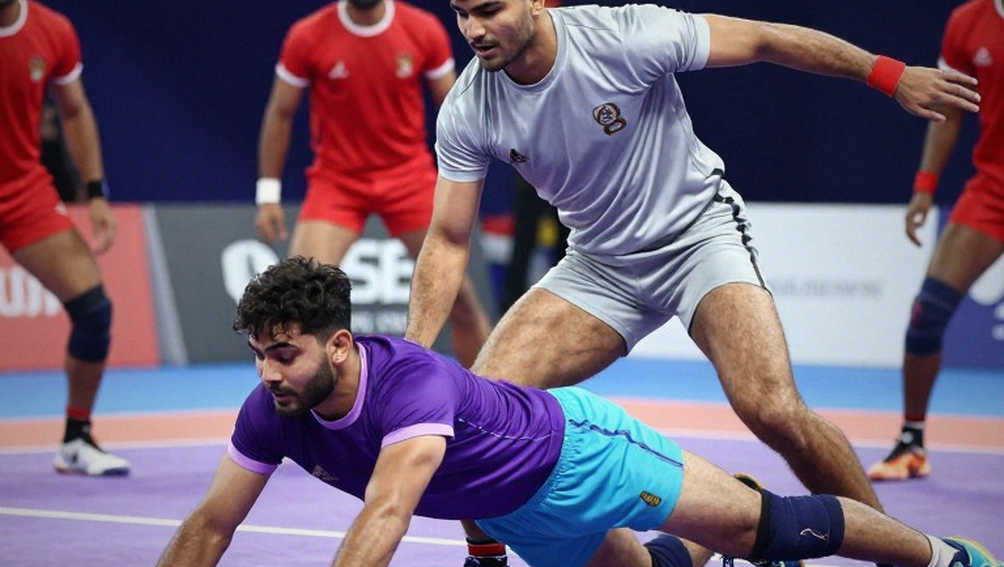
The event itself is new. This is the inaugural edition of the Commonwealth Kabaddi Championship, hosted in Ahmedabad, Gujarat, running October 21–31, 2026, with 14 Commonwealth nations expected. The code is Standard Style — rectangular court, 7 vs 7, two 20-minute halves. That distinction matters against Punjab's rural Circle Style, and at an international event there is no Circle Style question at all.
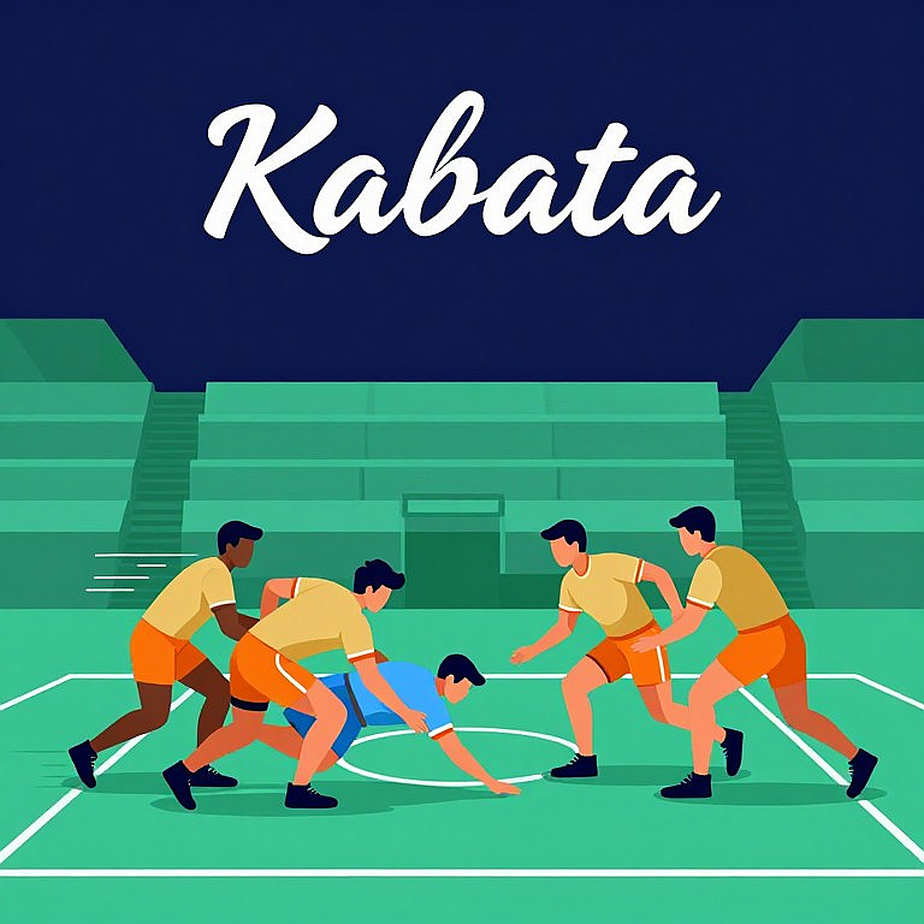
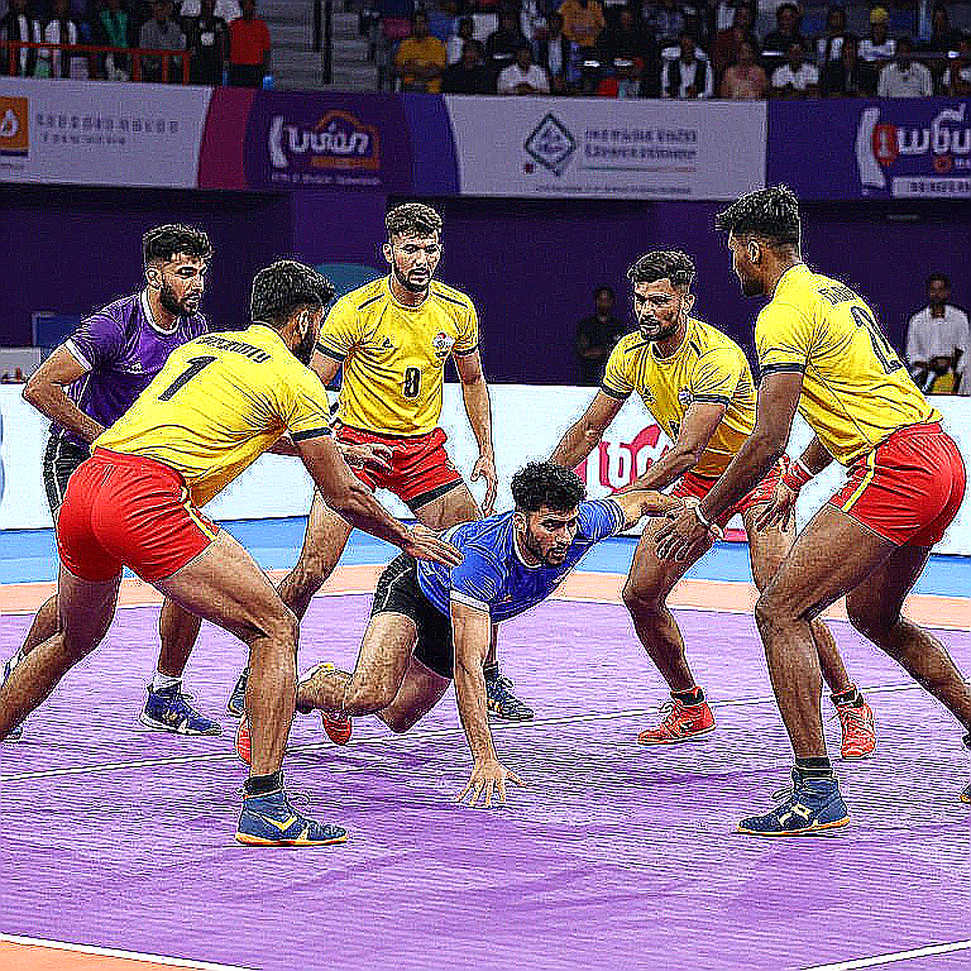
You cannot read a selection without reading the mat, so a short rules primer is necessary. A raider enters the opponent's half within 30 seconds and must chant kabaddi continuously; if the chant breaks, the raid is void. Touching a defender and returning safely scores. Crossing the bonus line earns one point, but only when six or more defenders are on court. When an entire side is ruled out, the opponent gets two points and the wiped side revives — the all out, a team-wide reset. After two consecutive empty raids, the third becomes do-or-die: fail again and the raider himself is out.
AKFI gave 17 probables, no final squad, no match format, and — most importantly — no stated criteria. The names themselves are not fully listed in the report. So beside the question of who was dropped sits a second question: on what logic? Hold both together or the selection politics of kabaddi stay invisible.
Start with travel load and recovery, because that layer is the most verifiable. The Asian Games 2026 squeeze ended only months before October 21. An elite raider's job is repeated lean, hard brake at the baulk line, dive and touch; every repetition settles into ankle, knee and groin. When the recovery window is tight, rotation becomes rational rather than punitive. On that reading, Sehrawat's omission may be load management, not exile.
I do not stop at the first explanation, though. The report never says whether Sehrawat was among those 12 gold medallists. That is not a small gap; it is the hinge of the whole story. If he was, rotation explains everything. If he was not, this becomes a separate selection story — form, injury, or tactical fit. Any analysis built on Sehrawat without resolving that is incomplete.
Now back to the corridor. The question is not whether India has raiding depth; it is how depth gets measured. Raiding talent is portable; defensive coordination is not. A young raider can enter a squad and score within three matches, because touch, turn and lobby-escape are individual skills. A cover-corner relationship is different. The cover must read the raider's shoulder angle; the corner must know when the cover is emptying; between them sits that narrow window I call the third-man angle.
That angle takes time to build. A new cover-corner pair decides a beat late in its first two or three matches, and in kabaddi a beat is a point. So even a squad with strong raiders carries its risk concentration in defence, not attack. The faster a squad list travels, the later its selection logic arrives — and defence pays the highest price for that delay.
Sehrawat's absence reads to me less as personal drama and more as a structural marker. When a system picks 17 names while leaving out its most familiar one, it is testing its replacement layer. The fact that no Asian Games gold medallist is included reinforces exactly that. The open question is whether testing a replacement layer and proving one are the same job. Depth is proven only when the alternative unit stands on the mat together — not in a name-list, but in a live raid-defence cycle.
In 2026, I launched a map; by 2026, the map had learned to listen. That experience applies directly here. My old template broke analysis into three panels — build-up, pressing triggers, half-space occupation. Kabaddi has its own translation: squad balance, load-and-rest triggers, and the corridors a defensive pairing actually owns. Without those three panels, a 17-name list is just a row of names.
Panel one is balance. An international squad typically carries two to three raiders, two corners, two covers and one all-rounder who can fill either role. Remove a lead raider like Sehrawat and you replace him in one of two ways: another raider absorbs the attacking load, or the load splits across two raiders. The second route slows the team, because every raid now carries more decisions.
Panel two is load and rest. This is where my 2026 stadium-condition box returns. Every match analysis I write now carries a fixed box: noise level, mat type, temperature, travel load. October in Ahmedabad means humidity, and a humid mat changes grip — a dive angle can be correct and still slip. In a do-or-die raid, that margin is the difference between out and point.
Panel three is defensive occupation, and this is where my suspicion sits. If the cover-corner pairing is new, it will make the same error early: both men lean toward the same raider, leaving the opposite lobby open. An opponent who reads that gap will take points off India's second unit. That is not weakness; it is the cost of learning. At a first-edition tournament, that cost will show on the table.
Now the 14-nation figure. Fourteen nations does not mean 14 contenders; the number describes geography, not depth. Within the Commonwealth, kabaddi is realistically confined to South Asian members and diaspora-heavy countries — India, Pakistan, Bangladesh, Sri Lanka, Malaysia, Singapore, plus diaspora sides from England, Canada and Australia. The participant count looks large; the competitive depth is probably thin.
The biggest unknown sits here: whether Iran is in the field. In Standard Style, Iran is India's only genuine challenger. With Iran, this is a test. Without Iran, it is a diaspora exhibition in which even India's second unit is favourite. The report does not mention Iran. The match I most want to watch may not happen — and that absence will tell us the event's true tier.
One more fact fixes the event's position: it is a first edition. No historical precedent, no established prestige benchmark, no reliable comparative read on squad strength. That vacuum can only be filled by matches. Anyone declaring a strong field before October 21 is mostly guessing.
The strategic centre of this tournament is not on the mat anyway. The report notes that the event's success could help shape kabaddi's future at the Commonwealth Games. That is the real purpose — a visibility platform, not an established institution. Kabaddi is not currently a Commonwealth Games sport, so pathway language is aspiration, not guarantee.
Branding a largely Indian-dominated sport as a Commonwealth championship is itself a strategy. The message is that kabaddi is a multi-nation sport, not a regional one. That off-mat message may end up larger than the on-mat competition.
Here is the part I hear least. The press pass got me into the room, but the silence taught me the game. The same lesson fits oddly well here: 17 names were announced, but not why these 17. That silence is not wisdom. It is control.
The two explanations circulating — depth and rest — are analysts' inferences, not AKFI statements. The distinction is not small. When the federation does not speak, the headline fills the gap, and the headline picks the most dramatic reading: they dropped Sehrawat. The accurate selection reading may be: they rested Sehrawat. Same fact, two different stories.
That produces an odd inversion. The headline buys traffic with the star, while the squad is built without stars. The commercial value of a star's absence and the competitive value of the squad pull in opposite directions — in advertising terms the team looks weaker; in tactical terms it looks experimental; both sit inside one headline.
The real risk is not on the mat. India losing is unlikely given the field. The real risks are two. First, with no published criteria, Sehrawat fans' frustration will attach to a simple story, which damages the federation too. Second, if the Commonwealth Games pathway does not open, this event stays a one-off branding exercise.
My 2026 lesson holds again: the data said nothing until I stood in an empty stadium and heard the structure. In empty venues I learned that the crowd was camouflage — it masked pressing rhythm and referee decisions alike. Here the camouflage is different: a star's name. The louder Sehrawat's absence rings, the quieter the selection architecture goes. Keep the listening equipment calibrated.
Publishing criteria is the cheapest fix available and the strongest defence. One page explaining why these 17 would blunt the headline. Load management is an accepted concept in kabaddi now; rotation does not need to be secret. Secrecy manufactures suspicion, and suspicion is the easiest weapon for star loyalists.
AKFI's administrative history is relevant too, since the federation has a record of selection disputes and recognition crises. Whether the missing criteria are continuity of an old habit is an open question. This report offers no new evidence on that history; what it offers is an incomplete announcement.
So from October 21 I will log three things. One, whether Iran is on the mat — that reveals the event's real tier. Two, how late the new corner-cover pairing decides in its first two raids — the hidden risk lives there. Three, whether AKFI publishes its selection criteria — if it does, the question changes; if it does not, every omission will return as the same story.
Which leaves the question: is kabaddi learning to grow without its stars, or learning to cover every gap with a star's name?