
India's 63 Points and Chinese Taipei's One-Point Margin: How a Kabaddi Scoreline Should Actually Be Read
**মূল উত্তর** চাইনিজ তাইপে পুরুষ কাবাডি দল দ্বিতীয় স্তরের এশীয় শক্তি হিসেবে Founded — জাপান ও দক্ষিণ কোরিয়াকে হারিয়ে এবং বাংলাদেশের কাছে ১ পয়েন্টে হেরে। ভারতের ৬৩-৩১ ধাঁচের ব্যবধান অল আউট রিভাইভাল নিয়মের স্বাভাবিক ফল, তাই সেটি ভারতের প্রকৃত শক্তির নতুন প্রমাণ নয়। ইরান এই গ্রুপে না থাকায় ভারতের প্রাধান্য এখনও অপরীক্ষিত। **মূল তথ্য** - ভারত তিন ম্যাচে ১৬০ পয়েন্ট করেছে, খরচ করেছে ৮০ — Average ব্যবধান প্লাস ২৬.৭। - চাইনিজ তাইপের তিন ম্যাচ ১ থেকে ৬ পয়েন্টের ব্যবধানে নির্ধারিত, প্রতিটি কাছাকাছি। - বাংলাদেশ ভারতের কাছে ২৩ পয়েন্টে হেরে চাইনিজ তাইপেকে ১ পয়েন্টে হারিয়েছে। - অল আউটে বিপক্ষ ২ বোনাস পয়েন্ট পায় এবং নিঃশেষ দল সম্পূর্ণ ফিরে আসে — বড় ব্যবধানের মূল কারণ। - ইরানই ২০১৮ এশিয়ান Gamesে ভারতের পুরুষ সোনার ধারা ভেঙেছিল, এবং ইরান গ্রুপ এ-তে নেই। **সূত্র উল্লেখ** মূল সূত্র: নাম-উল্লেখহীন “হাইলাইটস” স্কোর রিপোর্ট; বাইলাইন বা প্রকাশতারিখ পাওয়া যায়নি। রিপোর্টে ব্যবহৃত “এশিয়ান Games ২০২৬” লেবেল সম্পন্ন গ্রুপ-পর্বের ফলাফলের সঙ্গে মেলে না, এবং তা স্বাধীনভাবে যাচাই করা সম্ভব হয়নি। **সম্পর্কিত প্রশ্নোত্তর** প্রশ্ন: ভারতের ৬৩-৩১ ব্যবধান কি ভারতের আক্রমণ শক্তির প্রমাণ? উত্তর: নয় — অল আউট রিভাইভাল নিয়মে দুর্বল ডিফেন্সের বিরুদ্ধে এই ব্যবধান প্রত্যাশিত, এবং রিপোর্টে রেইড-পয়েন্ট বা ট্যাকল-পয়েন্টের কোনো ভাগ নেই। প্রশ্ন: চাইনিজ তাইপের কাবাডি কেন উল্লেখযোগ্য? উত্তর: প্রবাসী ভিত্তি বা গ্রামীণ সার্কিট ছাড়া, শুধু বিশ্ববিদ্যালয় দল, জাতীয় ট্রেনিং সেন্টার ও পদক-ভিত্তিক ফান্ডিং দিয়ে তারা জাপান ও দক্ষিণ কোরিয়াকে হারিয়েছে — অর্থাৎ এটি একটি প্রাতিষ্ঠানিক মডেলের ফল। প্রশ্ন: এই রিপোর্ট থেকে ভারত-চাইনিজ তাইপে ম্যাচের পূর্বাভাস দেওয়া কি বৈধ? উত্তর: নয় — বাংলাদেশ-ভারত-তাইপে ফলের ট্রানজিটিভ অনুমান কাবাডিতে চলে না, কারণ ফল নির্ধারিত হয় স্টাইল ম্যাচআপ ও রেইডারের দৈনিক Formে।
A scoreline lodged in my head last week: India 63, South Korea 31. Beside it, two more — 49-24 and 48-25. Across three matches India scored 160 points and conceded 80. But the numbers that stopped me were not India's. Chinese Taipei: 34-30, 43-37, and a one-point defeat to Bangladesh.
Six results sharing one table, telling two completely different stories. One is about who the biggest fish is. The other is about who is learning to swim, and how fast. A scoreline only ever tells the first story. The second one requires going under the water — and this report, which calls itself a highlights piece, stops exactly there.
I have watched kabaddi from three vantage points for seven years: the arena, the mat, and the score feed. When I first started reading Asian kabaddi scores at night in a Bangalore room, I learned one thing early: in kabaddi the scoreline is never the story of the match. It is the consequence of the match.
Context
For readers who have never seen kabaddi, three lines — because the key to the sport hides inside its scoring rules.
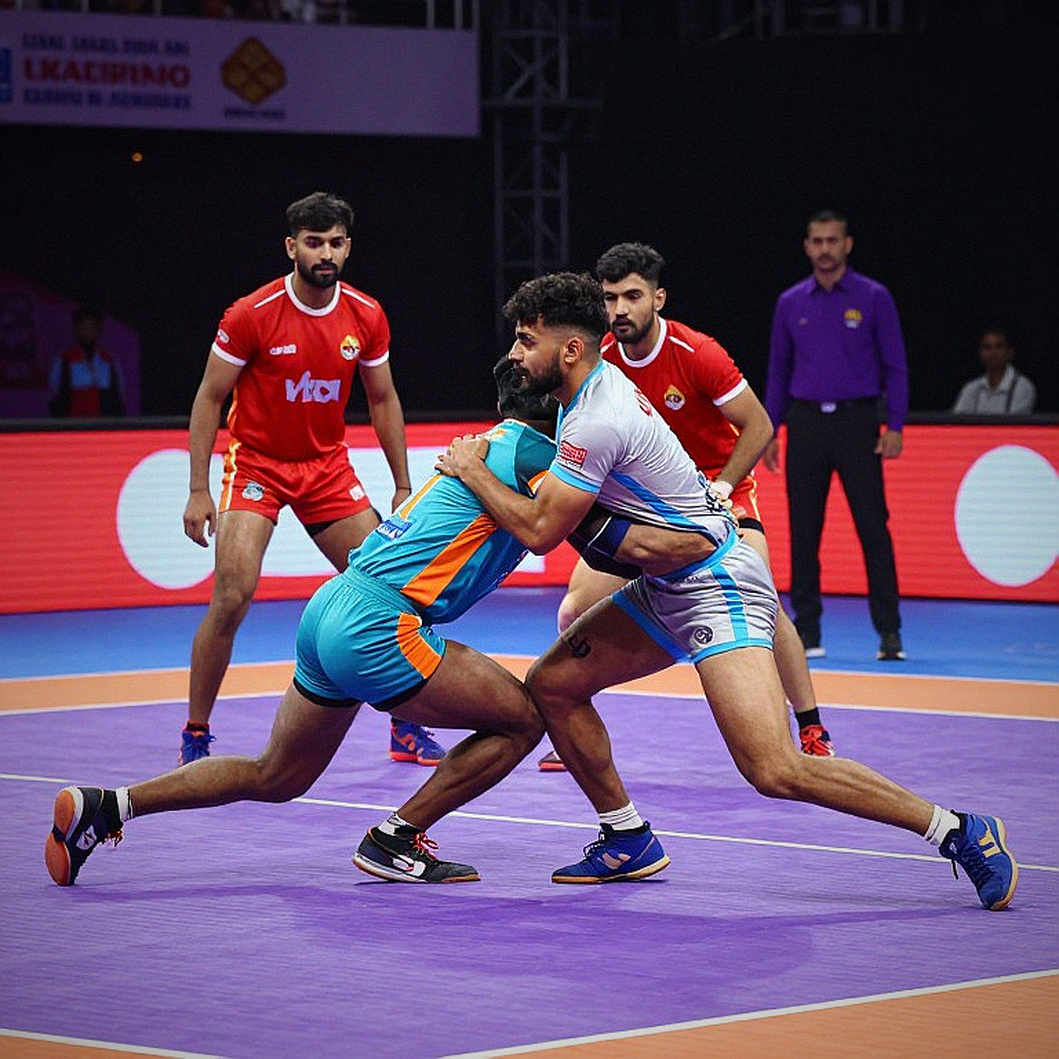
Kabaddi is seven against seven on a 13m x 10m mat, two halves of 20 minutes. One player from each side, the raider, crosses into the opponent's half, touches a defender, and must return to his own half within 30 seconds, chanting kabaddi kabaddi the entire time. Break the chant and the raid is void. If the defenders collectively stop the raider inside their own half, that is a tackle, and the point goes to the defence.
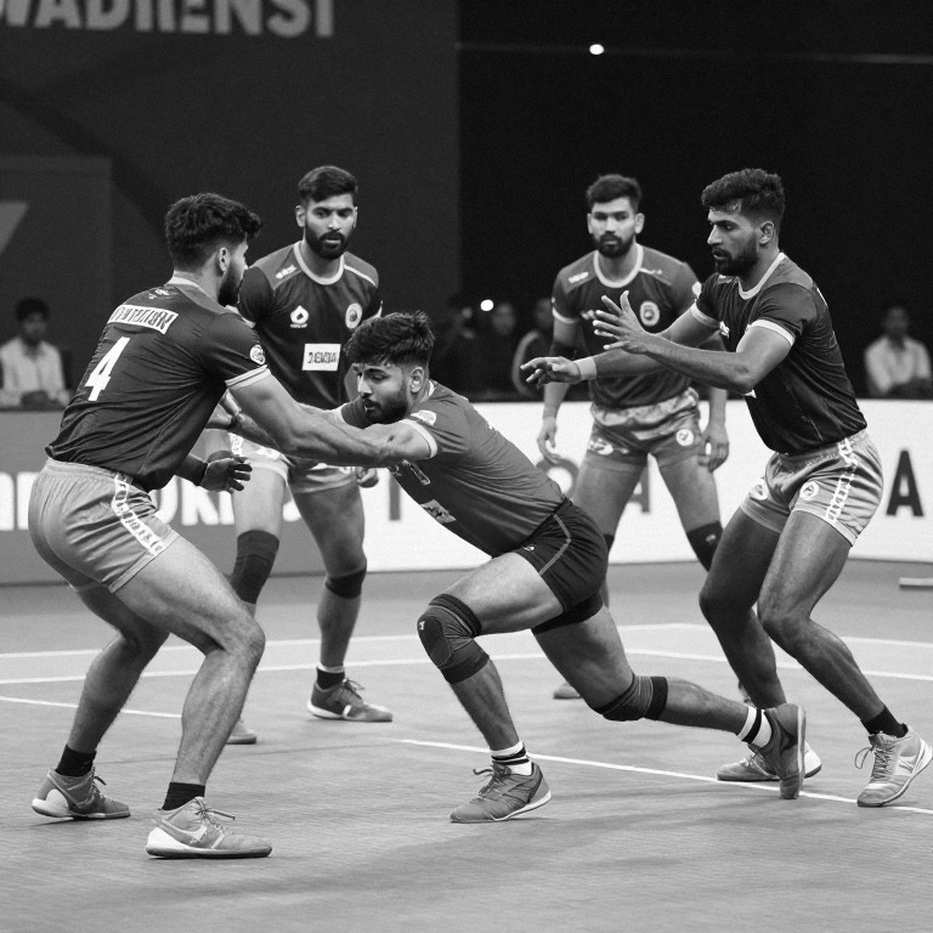
Now the crucial rule. What happens when all seven players of one side are ruled out? The opponent receives two bonus points, and the eliminated side is fully revived and sent back onto the mat. This is an All Out — effectively a team-wipe reset. The Asian Games, the Kabaddi World Cup and the Pro Kabaddi League all use this same Standard Style.
That single rule explains why a score like 63-31 is possible — and why the margin itself proves very little. When a defence collapses, the score runs away within minutes. A 20-plus-point gap in a mismatch is what a mismatch is supposed to look like. The margin is arithmetic produced by the All Out rule, not evidence of a new Indian invention.
There is also the bonus line, a mark deep in the opponent's half worth one point, but only when the defending side has six or more players on court. And the do-or-die raid: after two consecutive empty raids, the next raider who fails to score is himself ruled out. Together these rules force matches to stay aggressive and inflate totals against weak defences.
Group A appears to contain India, Chinese Taipei, Japan, South Korea and Bangladesh, with a top-two semi-final pathway. And the single biggest fact missing from the report is Iran. Over the past decade, Iran is the only men's side to have broken India's gold run at this level, in 2026. Iran is not in this group. The one team that can genuinely test India sits outside this report.
Core analysis
India's three wins came against Japan, South Korea and Bangladesh. None of them was Iran. In kabaddi terms this is a normal, expected group-stage sweep. The opponent against whom a win means something is absent from the report — so the claim that India are in dominant form is assumed here, not proven.
Second, the report names not a single Indian player. No raider, no raid-point to tackle-point split, no successful raid percentage. In kabaddi, that split is the actual instrument for measuring a team — is this side raid-first or defence-first? The two require completely different counter-plans. A score-only report cannot answer the question. Sixty-three points is a character, but behind the 63 there is sweat nobody describes: the knee angle on the mat, the rhythm of the breath, the pressure of the 30-second clock. The number states the outcome. Nobody states the cost.
This is where my real interest sits, and it is not India. It is Chinese Taipei.
Their three matches were decided by margins of one to six points — beating Japan and South Korea, losing to Bangladesh by one. That is not an accident. It is a recognisable profile: a side that keeps matches close but has not yet learned to close a tight finish. The classic picture of a second-tier team.
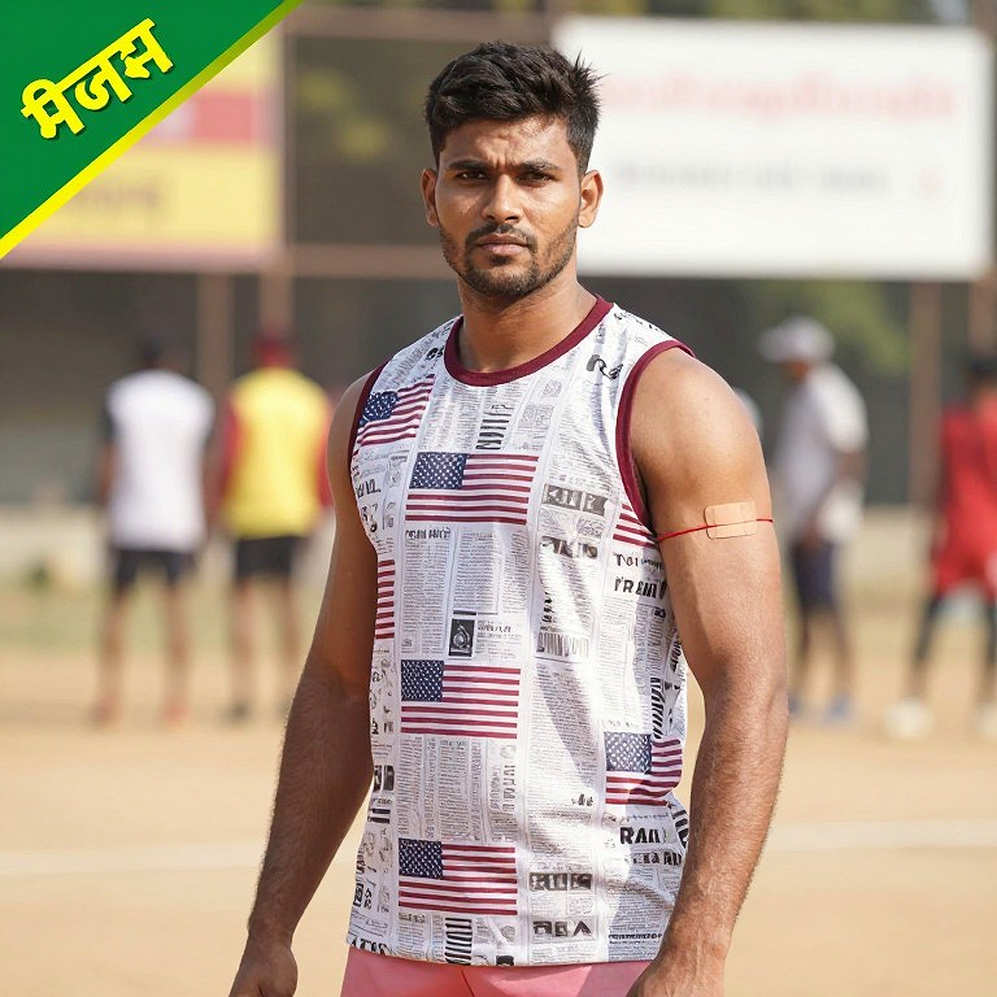
But Chinese Taipei's kabaddi model is not built on the familiar South Asian template. There is no diaspora base, no village circuit. It stands on three pillars: school and university teams, a national training centre, and medal-linked Asian Games funding. This is institutional, not mass-based. And that is precisely why the result is replicable — not a flicker of scattered talent, but the output of a system. It started on a rented university gym mat, long before the Asian Games stand learned the name. No cameras, no sponsors, just a small pool of athletes and one question: why are we playing this sport at all?
Look at the internal balance of the group. Second to fifth place is separated by single-digit margins. Chinese Taipei beat Japan and South Korea and lost to Bangladesh by one point. Bangladesh lost to India by 23 and beat Chinese Taipei by one. The semi-final race among four teams is genuinely open. But there is a trap here that I never fill with assumption: transitive inference. Bangladesh beat Taipei, Taipei beat Korea — therefore Bangladesh are better than Korea? That arithmetic does not work in kabaddi. Results here are set by style matchups and by a single raider's form on the day, not by the general logic of a league table.
Now I return to my own ground. Bangladesh.
A 23-point loss to India followed by a one-point win over Chinese Taipei produces a pattern I have watched repeatedly from Dhaka to Bangalore. Bangladesh's raiding unit functions; the defensive structure breaks. In kabaddi, that combination produces volatility — heavy defeats, then heavy wins, with no forecast available. The reason is structural, not tactical: kabaddi carries national-sport status in Bangladesh and has a deep grassroots base, but the professional pathway is narrow. India's picture is the inverse — the rural akhada, a professional league, and the backstop of railway, police and army jobs. This is the thesis of my writing: the same raw material, two different systems, two different outcomes. Kabaddi does not lack talent. It lacks the machinery to keep talent.
Saying that requires one clarification, because I work on both sides of the border: Bangladesh's failure is Bangladesh's limitation, and there is no room here for softening it into different contexts. Bangladeshi kabaddi is commercially unexploited — that is a failure, not a context. Just as Chinese Taipei's rise is an institutional success, not a miracle.
And another gap in the report: dependence on a single raider, the defining structural risk of the sport. One injury and an entire plan collapses. With zero individual data here, that risk cannot be measured at all. Only one name appears — South Korea's Jang Kun Lee, who played in the Pro Kabaddi League, most prominently for the Bengal Warriors, and is among the most recognisable foreign faces in the sport. His current role — player, captain or coach — the report never says. But the name is itself a signal. Players returning from the PKL are the real channel through which kabaddi spreads internationally — technique learned in the Indian league, carried home to the national side. Slow, but it is the only proven route.
One more thing a scoreline never shows: a raider's prime usually runs from about 26 to 32, and every raid is a small gamble on knees, ankles and shoulders. Outside the PKL and the national pool, income security is thin. That structure does not appear in a group-stage scoreline, yet it decides which countries still have a kabaddi programme five years from now.
Contrarian angle
Now my most uncomfortable question, which is about journalism, not the sport.
The report labels itself Asian Games 2026 while delivering completed group-stage results. The 20th Asian Games are scheduled for 19 September to 4 October 2026 in Aichi-Nagoya, Japan. So is this another event, a mislabel, or pre-dated content? I cannot say with certainty, because I do not have that data. What I can say is this: a report in which not one fact carries a source cannot have its central numbers treated as a source either. It is a lead awaiting verification, not analysis material.
Second discomfort: an internal contradiction. The headline says India finished the group stage on top. A later paragraph has Chinese Taipei still to face India. If the group stage is finished, there is no one left to face. The headline is SEO language, not a format-accurate statement.
Third, the words easy and stellar. The All Out revival rule is designed so that mismatches produce wide margins. The margin therefore carries little new information — but calling the wins easy carries a hidden cost: it assumes India's raiding or defensive structure actually functioned well, which the report never shows. And that is the real risk — overconfidence in the group stage, followed by a reaction to an Iran defeat that would be driven by expectation, not by performance.
The highlights format is itself news. Outside South Asia, kabaddi results circulate mainly in low-cost, source-light feeds, because no specialist reporting infrastructure exists. The biggest obstacle to the sport's international reach is not a weak defence. It is a weak information ecosystem.
Takeaway
I am reading these scorelines from a room in Bangalore, and one question keeps returning. What did these three matches actually prove?
That India played well in the group stage was always expected; they are a tier above the rest of this group. That Chinese Taipei have entered the second tier is the genuine new information, and the only subtle signal in this report. That Bangladesh lose by 23 one day and win by one the next is not luck. It is a portrait of a system.
If India and Iran meet in the semi-final or final, the real answer of this tournament will arrive. Until then, writing a story from group-stage margins is like judging a wrestler's power by the warm-up cloth tied around his knee. The scoreboard was the door. The real room is inside, and the key is the raid-point split — which this report never provides.