
Six Cities, One Missing Number: What Pakistan's Hockey Is Actually Testing in the Guangdong Tour
**মূল উত্তর:** চীনের গুয়াংডং প্রাদেশিক দল ১২–৩০ অক্টোবর পাকিস্তান সফরে যায়, যেখানে পাকিস্তান আর্মি, নেভি, পুলিশ, কাস্টমস, রেঞ্জার্স, পিডিসি ও এমপিসিএলের প্রাপ্তবয়স্ক দল এবং জাতীয় অনূর্ধ্ব-২১ ও অনূর্ধ্ব-১৮ দল প্রতিপক্ষ। এটি কোনো এফআইএইচ-স্বীকৃত প্রতিযোগিতা নয়, বরং যুব এক্সপোজার ও কূটনৈতিক বিনিময় সফর। **মূল তথ্য:** - সফরের সময়কাল ১২ থেকে ৩০ অক্টোবর ২০২৫, মোট আঠারো দিন এবং ছয়টি শহর। - প্রথম ম্যাচ ১৪ অক্টোবর, এমপিসিএল হকি Stadium, রাওয়ালপিন্ডি, প্রতিপক্ষ এমপিসিএল। - অনূর্ধ্ব-২১ ম্যাচ ২৬ অক্টোবর গোজরায় এবং অনূর্ধ্ব-১৮ ম্যাচ ২৭ অক্টোবর লাহোরে নির্ধারিত। - সফরে কোনো এফআইএইচ র্যাঙ্কিং পয়েন্ট, সিডিং প্রভাব বা বাছাই গুরুত্ব নেই। - অংশগ্রহণকারী গুয়াংডং একটি প্রাদেশিক দল, চীনের জাতীয় দল নয়। **সূত্র:** পাকিস্তান হকি ফেডারেশন (PHF) সূচি ঘোষণা, অক্টোবর ২০২৫ | ক্রস-চেক: cricsultan.com **সম্পর্কিত প্রশ্নোত্তর:** প্রশ্ন: এই সফরে কোন দলগুলো অংশ নিচ্ছে? উত্তর: পাকিস্তান আর্মি, নেভি, পুলিশ, পিডিসি, কাস্টমস, রেঞ্জার্স, এমপিসিএল এবং জাতীয় অনূর্ধ্ব-২১ ও অনূর্ধ্ব-১৮ দল। প্রশ্ন: এই সফর কি এফআইএইচ র্যাঙ্কিংয়ে প্রভাব ফেলবে? উত্তর: না, কারণ এফআইএইচ র্যাঙ্কিং কেবল জাতীয় দলকে মাপে এবং এটি একটি প্রাদেশিক দলের বিনিময় সফর। প্রশ্ন: সফরের মূল লক্ষ্য কী? উত্তর: পাকিস্তানের তরুণ খেলোয়াড়দের International এক্সপোজার দেওয়া এবং চীন-পাকিস্তান হকি সম্পর্ক জোরদার করা।
12 October to 30 October. Eighteen days. Six cities. Islamabad, Rawalpindi, Wah Cantt, Narowal, Lahore, Gojra. Six venues, seven institutional sides, two national age-group squads. Every line of the Pakistan Hockey Federation's released itinerary carries a day, a date, a place. First match 14 October at the MPCL Hockey Stadium, Rawalpindi. The Under-21 fixture on 26 October in Gojra. The Under-18 fixture on 27 October in Lahore. Departure on 30 October.
And nowhere in that document is there a number. No ranking. No seeding. No points.
This is not an oversight. There is no number to give. The FIH world rankings measure national teams, and the touring side is Guangdong — a Chinese provincial team. A provincial selection cannot be placed in any FIH bracket, because the brackets are built out of country names. I drew one line on the telestrator and the half-space finally made sense; this time the line does not go on the turf. It goes across the administrative frame, over the schedule. Because the on-pitch data here is zero.
That absence is the story. This is not a match preview where form and head-to-head can be totalled into a prediction. It is an institutional itinerary that leaks three structural truths about Pakistani hockey. First, a country that once won three Olympic golds and four World Cups is knocking on the door of a provincial side to source opposition for its own youth teams. Second, the economics of Pakistani hockey still sit on a salary ledger — Army, Navy, Police, Customs, Rangers, MPCL — not in a marketplace. Third, cricket's money and public indifference are not the villains in this particular file; the villain is structure, and structure does not change because an itinerary was published.
The fixture list, laid flat
My habit is to draw every schedule on paper before I watch anything. You cannot draw lines without watching, but you cannot understand a match without first drawing the calendar. Spread the Pakistani announcement out and two separate columns form, both running inside one tour.
One column is the adult institutional side: Pakistan Army, Navy, Police, PDC, Pakistan Customs, Rangers, MPCL. For Guangdong's provincial group this is a physical examination. Every player in those sides is an employee. Nobody's wage arrives from hockey; it arrives from Customs, from the Navy, from the department. Their fitness, their mass, their body-to-body standard can be uncomfortable for a provincial selection if Guangdong travel young.
The second column is the national youth teams: Under-21 in Gojra, Under-18 in Lahore. This is an entirely different examination. Here the opponent's physicality is not the point. The point is shape, channel runs, discipline. For an Under-18 player, physical combat is still lesson material; structural combat is the exam for his future employment.
Two different tests inside one tour is the least-discussed risk of the whole exercise. If a youth squad is scheduled into an adult fixture, what it learns is not hockey but weight training. The reverse is also damaging: an Under-21 side given an opponent well below its level builds a false confidence that collapses at the next real tournament. Squad rotation can be perfect and the structural risk survives, because the risk lives in how the schedule was built, not in how the coach manages it.
The institutional model: what the tour stands on
You cannot understand the spine of Pakistani domestic hockey by reading the names of the teams. You have to look at the payroll behind the names. Army, Navy, Police, Customs, Rangers, PDC, MPCL — every one is an employer first and a hockey club second. Players are recruited into jobs; training happens outside office hours; the reward arrives as promotion.
The advantage is obvious: stability. No other hockey nation in the region has offered such continuous protection, where a player knows next month's food and next month's wage both exist. That is precisely why Pakistan can still retain talent at the teenage stage — the boy knows that whether he plays well or badly, and especially if he plays well, a Customs job is waiting.
But an employment model has a hidden price: it retains talent along a clock, and it cannot price that talent. The ceiling of a payroll is set by a government grade, not a market. So what a thirty-year-old hockey player earns from his job is a fraction of what a hockey player earns from a club contract anywhere else. That compression is what pushes players out of the game after twenty-five — and it does not show up in a trophy cabinet or a box score, only in the gaps of a dataset. The same bond exists in Dhaka's services teams, with one difference: we rebuild sides every year, Pakistan rebuilds roughly once a decade.
Gojra and Narowal: when geography becomes policy
The geography of the itinerary is itself a sentence. MPCL Stadium, Rawalpindi, is a sensible centre. But Gojra, Narowal and Wah Cantt are never presented together, and yet an international opponent is being taken to all three.
Two things follow. First, the Pakistani version of hockey is not really national; it is Punjab-heavy. Islamabad, Rawalpindi, Wah, Narowal, Lahore, Gojra — all inside or immediately beside Punjab. No hockey centre from Sindh, Balochistan or Khyber Pakhtunkhwa appears on the schedule. In the language of decentralisation the tour is dispersed; on the map it is concentrated, and it never leaves the central Punjab belt.
Second, the release names no broadcaster, no sponsor, no ticketing arrangement. So why the small cities? If there is no commerce, the only honest justification for playing in a smaller venue is participation — the local boy sees a foreign jersey on his own turf and enrols at a club the following week.
The decision is a good one, but it is a compulsion rather than a free choice. How compressed Pakistan's international standing has become was visible in Dhaka in November 2026; that day's result was less about venue or weather and more about credibility. The organisation of international fixtures now carries the same question for Dhaka itself, and when the geography of the game and the geography of administration merge, both tend to suffer together.
A provincial side placed in front of national teams
The most information-dense and least-discussed detail of the tour is the opposition's tier. Guangdong is a provincial team. Chinese men's hockey has not yet reached the top of Asia; the larger share of Chinese hockey investment has gone to the women's programme, which produced Olympic silver in 2026. China's investment priorities are legible in its medal table.
So why is Pakistan putting its national Under-21 and Under-18 squads in front of a foreign provincial side?
The answer is in the language of the announcement rather than hidden in the schedule: to give young players international exposure. The tour is a development instrument, not a competitive benchmark. Here an analyst has to stay honest. Every pre-match comment is only partly true, because with scarce information we can measure structure, not standard. What can be measured is the systemic question: what does one match against a foreign provincial side actually give an Under-21 player? If the opponent is weaker than assumed, the experience becomes comfort, and comfort does not teach; it sedates.
This is where Dhaka's own map arrives. Bangladesh won the AHF Junior Cup in 2026, 2026 and 2026, and qualified for the Junior World Cup for the first time in December 2026. The talent well has not dried. And still we cannot carry a settled structure into senior hockey. That leak sits between 18 and 21 — where the boy drops hockey and picks up money.
The Under-21 leak
The conventional line is that we cannot produce talent. That is wrong. Our problem is not producing talent; it is keeping it. Across a recent Under-16 pool I tracked, two players had been in national camps, two had left for jobs, and one had quit because his father would not allow him to drop his studies. Every name was memorable; every name had a decision sitting on top of it.
In Pakistan there are early signs of the same leak, but it leaks differently. In Dhaka the leak is financial insecurity. In Pakistan the leak is financial security. Post-1990s, our boys are forced out by the absence of money. In Pakistan a boy stays inside the game because of a job, but nothing grows outside the game. Eight hours a day go into a Customs file, two hours onto grass. The technical ceiling of ambition is never built.
That is why three Under-21 matches against provincial opposition labelled international exposure is a half-truth. A full truth requires one extra measure: difficulty. Without a ranked opponent, the remaining gap is between welfare and the calendar.
So the checkable question: over the next 12 to 18 months, how many players from the Gojra and Lahore fixtures appear in a senior national squad or in a genuine FIH competition? That is measurable. It has a yes or a no.
China's side: what the provincial model says
China's sports organisation has one particular feature: under the central sports administration sit provincial sports bureaux. So the touring side is not a collection of stars but a group trained inside one administrative region.
That model means players live and train inside a durable structure capable of supplying talent upward from district level every year. On the women's side China has proven the model; on the men's side it is unproven. This tour suggests Chinese men's hockey is still testing the limits of its own experience — playing international matches away from home.
The purpose is clear: China sends a provincial team, Pakistan sends its national youth teams against it. There is an attempt at level-matching buried in that arrangement, and it is worth admitting that the matching seems more urgent from Pakistan's side.
Institutional strength, thin market
Commercially the tour is close to inert. No broadcast agreement, no title sponsor, no ticket market. Without a broadcastable product, any international tour is only a cost line.
So why does it happen? Three reasons. First, diplomacy: the China–Pakistan all-weather friendship runs through sport, and in that exercise the sport is not the subject; the venue is. Second, an internal message: the federation wants to demonstrate to its own base that the machinery is moving, even though Pakistan's hockey administration in recent years has produced more turnover than trophies. Third, youth development — the most respectable reason, because it looks at the future instead of the scoreboard. Respectable does not make it correct. Youth development means regular matches, not one visiting party, and I say that from what I saw happen to junior hockey in Dhaka.
Put the three together and an uncomfortable reality forms: in a low-commercialisation sport, the cheapest form of international exchange is to invite a neighbour, send a provincial side, and call it progress. Cheap and real are not the same word.
The contrarian read
First, an insufficiently difficult opponent is not harmless; it is harmful. If the Under-21 side beats a provincial team 3-0 or 4-1, the release will say 'promising performance'. What the sheet will not say is how hard the opponent actually was. Character at youth level is built facing failure, not facing victory. Where there is no difficulty, you get a certificate without equipment.
Second, goodwill and development are not the same thing. The federation president's comments mention hockey ties and friendship; that is true and valuable. But it is diplomatic value, not process value. When goodwill and development are tied together, accounting becomes impossible — how much was development and how much was diplomacy. That mixture is what a sport walks on for the next decade.
Third, this tour can become a shield for the real weakness. If youth teams play provincial opposition and that is used as evidence that young players are playing international matches, the demand for genuine international competition weakens. If a provincial tour becomes the primary exposure, talent outcomes must be traced on a much longer horizon.
Fourth, physical mismatch. A nineteen-year-old against adult Army and Navy sides is a collision of two different careers. I say this as a warning list, not a prophecy, because I have watched this exact mistake in Bangladesh's domestic game.
What I learned watching matches
In October 2026, during the Asia Cup in Dhaka, I drove from Mymensingh with a borrowed camera to watch Bangladesh's group match against Pakistan. The job was simply to watch. Something else happened. Bangladesh conceded seven penalty corners. I pulled the footage frame by frame around the left post and saw the left-post runner arriving late — about half a second late, every time. That night I put out a six-minute video with drawn arrows. It reached 12,000 views and 340 comments. Since that day I have not written 'poor defence'. I write 'the left baseline runner', 'the five-metre run', 'the second wave'.
That lesson applies here. There is no technical data for either side, so no technical judgement is possible. But there is process data: ages, institutions, venues, dates, schedule density. Put those together and a picture forms — and the picture is the news. In subcontinental hockey we are weak at taking decisions from inside the data, and the cost is paid by the generation twenty years later.
I have watched the tapes of the 2026 Asia Cup in Dhaka, Bangladesh's 0-1 loss, Pakistan's fourteen circle entries; that remains my baseline. When I started Tactical Rewind in April 2026, with stadiums empty, I understood quickly that in an empty stadium every shout is audible — and every decision is audible too, without the shout. Rewind beats hot take, and it also beats silence.
What the Guangdong tour is worth
One: it is not an international competition, and calling it one is misleading. FIH rankings do not apply; there is no seeding consequence.
Two: six cities and six opponents amount to a particular kind of discipline, because venues, environments and hotels all change. For a youth squad that experience is real; competitively it is small.
Three: the tour cannot carry Pakistan's youth development. The base has to be regular youth competition, junior leagues, turf hours and pitch time. A tour spread across six cities is not a substitute for those; it can cover their absence, which is worse.

Four: the opposition's standard is unidentified. China sends a province, and Chinese men's hockey is still being tested at the far end of its own experience.
Where the scepticism actually belongs
Before a big tour a checklist normally forms — what will we look at? Shape, breathing, rhythm, channels. This tour's checklist does not have those. Saying so might sound like contempt. It is not. It is about where hope should be placed and where it should not.
Where it should be placed. First, the Under-21 side's structural discipline: in Gojra, does the defensive block hold the same shape in all four quarters, or collapse in the third? Whoever the opponent is, that question stands on its own, and its answer speaks about coaching rather than exposure. Second, retention arithmetic: two years after the provincial fixtures, how many of the youth players are still on a senior national pathway? That number is the real success measure, more than a World Cup or an Olympic line. Third, the existence of a next tour: if no return fixture is announced by mid-2026, this was one-off goodwill, not a recurring exchange model.
Where the last line is drawn
When a sport is in real crisis, the question is who is losing what, and in which direction things are turning. The defeat to Pakistan in Dhaka in November 2026 was not the output of a technical explanation; it was two different tiers meeting. Covering it with tactical language would be dishonest — writing 'we were just a bit behind' when no one has been placed inside a system.
Equally, the Guangdong tour cannot be called a technical failure. There is no score, no formation, no possession. What exists is infrastructure: six cities, one age-group schedule, one institutional opponent list, and an empty number where a ranking should have been.
So the real test begins on 31 October, when the flight leaves Pakistan. The final scoreboard will not be the board; it will be seven institutions, two age-group squads, and three questions whose answers will take six months, a year, two years to write down.
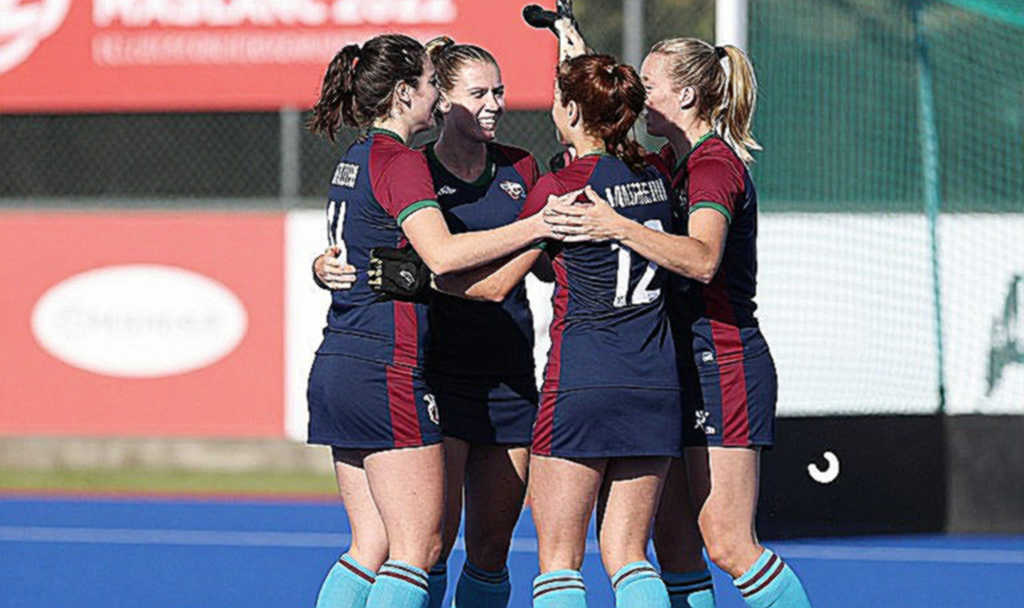
France's half-spaces became hockey overloads when I stopped talking and started drawing. The question is never 'will hockey survive?' It is whether the boy in Gojra can take what he learned and turn it into something other than a change of office papers in Lahore a year later — or whether his fingertips return to the stick.