
The Twentieth 'Annual': The Bishop's College–LC Hockey Fixture and Bangladesh's Vanished Pipeline
I have never heard the sound of water being spread on a field's grass, yet I...
I have never heard the sound of water being spread on a field's grass, yet I know how it feels. In the first light of morning the turf is soaked, by noon it dries, and by evening the ball touches the flat face of someone's stick. I have not watched a single second of the match I am writing about today. The twentieth annual hockey encounter between Bishop's College and 'LC' reached me like a staged press release, full of enthusiasm, wrapped in excitement, speaking of both teams' 'passion, determination and team spirit'. But one word stopped me.
'Annual'.
Those two syllables are the biggest news of the day, and the most painful. Because I write from a place where hockey leagues and the word 'annual' no longer exist. The Dhaka Premier Division League did not run from 2026 to 2026, Maulana Bhasani Hockey Stadium sat padlocked, and outside the capital we have begun to forget the word 'annual'. Who keeps twenty years of continuity alive, and who loses it — today's piece walks toward that question, not toward the result.
Bishop's College. The name made me pause the first time I read it, because a single name can hide two different worlds. One is Bishop's College, Kolkata — an old institution affiliated with the University of Calcutta, where field hockey is played. The other is Bishop's College School in Sherbrooke, Quebec, Canada — where ice hockey is played. The first lesson of sports analysis is that when a name belongs to two worlds, rushing to a conclusion guarantees an error.
In the text that reached me there is not a single word like 'circle', 'penalty corner', 'stick' or 'turf'; nor is there 'puck', 'rink' or 'power play'. The sport itself cannot be confirmed from the text. I proceed on the field-hockey default, but keep the ice-hockey possibility open. This caution is not decorative. If the institution is Canadian, the entire analytical frame changes — rules, federation, ranking, everything. If it is Kolkata's, the story lands elsewhere: in India's deep school-and-college hockey culture, a culture that once fed the national team.
Even with the sport uncertain, one thing is clear. What reached me is not analysis — it is promotion. No player is named, no coach, no score, no statistic. There is only 'passion', 'determination', 'team spirit' and an 'unforgettable clash'. Who will win, who is fit, who is in form — not one sentence exists. Anyone who reads that text and believes they understand the match's tactics is fooling themselves.
Yet one number exists, and that number is the real story. 'Twentieth'.
What does it mean for an institutional match to be staged for twenty straight years? It means these two institutions have been fielding hockey teams for nearly two decades. Coaches changed, students changed, perhaps funding changed, but the fixture did not stop. Without sustained institutional commitment, that continuity is impossible. And the first condition of any talent pipeline is exactly that sustained commitment. The shape of that continuity is familiar: institutional fixtures usually harden into fixed-date traditions — a founder's day, an annual sports week, an alumni reunion. The ordering in the name 'LC–BC' may even signal which year is played at whose ground, though that cannot be confirmed from the text. What is clear is a closed, recurring rivalry between two institutions — no third party, no open tournament.
This is where my own history enters. In 2026, aged twenty-eight, I left a district desk in Rangpur for a digital newsroom in Dhaka, and was handed the beat nobody wanted — the Asia Cup at Maulana Bhasani Hockey Stadium, the country's one real venue. Bangladesh's campaign ended before the final, but in the 47th minute of the last home match a penalty corner broke down, and I wrote 900 words about 3,000 people exhaling at once instead of the result. Posted at 1 a.m., it was shared 4,000 times by morning, and the desk created a weekly column called 'From the Maath'. Since then I keep one rule: the scoreline cannot appear before the fourth paragraph. Before every assignment I hand-write one sensory sentence — sound, light, smell — then open the laptop. Today's sentence is that word 'annual'.
To understand the base of hockey's pyramid, I do not need to travel to a World Cup semi-final. The base is a school field, a college turf, and a fixture between two institutions that runs year after year. The Netherlands, Australia, Germany, Belgium, Argentina, India — none of their hockey was born one morning. They built a supply chain: school to college, college to club, club to state, state to national team. Players drop out at each step, but those who survive move up. If one link breaks, no player rises, and the hole at the top shows up years later, when a team suddenly cannot win.
In South Asia, school-and-college hockey has a particular history. India's college hockey once fed the national team; players rose from grounds in Kolkata, Chandigarh, Jhansi, Lucknow. At the foot of that pipeline sit matches like Bishop's College versus 'LC' — matches nobody watches on television, but without which the next generation's ball never spins. The conversion rate from college hockey to the national level is very low — most players stop here — but if that rate hits zero, the pipeline dries up entirely.
Now I return to my own soil. What is Bangladesh hockey's problem? Two answers are in circulation. The first says cricket has eaten all the money and attention, leaving hockey orphaned. The second says we lack talent. Both answers are convenient, because both let us wash our hands.
A talent shortage? Three AHF Cup titles — 2026, 2026, 2026 — three in a row. Success at the Junior AHF Cup too. Those results say one thing loudly: our pool is not dry. Talent is born. The question is not talent; the question is whether talent survives.
This is where the ledger I call the 'counterintuitive ledger' comes in. Bangladesh hockey does not lose in finals; it loses in the dead time around them. The years the Premier League does not run, the months after a Junior Cup win, the administrative silence after a home play-off — that is where generation after generation drains away. In 2026 the league vanished, and that empty year made it clear to me that the real opponent is not any country; the real opponent is the calendar.
Behind that drain sits an innocuous-looking economics. A good hockey stick costs about USD 300. A modern goalkeeper kit exceeds USD 5,000. In Europe those numbers may be bearable, but for a Bangladeshi college student or their family they are nearly impossible. When talent cannot buy a stick, talent walks toward the cricket ball, because there a tape-ball and a plastic bat are enough to play. Here hides my first position, which I never declare outright: cricket did not take hockey from us; we made hockey so expensive that it slipped beyond ordinary reach.
In 2026 I watched the Tokyo Olympic hockey tournament from a rented room in Rangpur at 3 a.m., filling notebooks with the high press, the 6-on-5 goalkeeper pull and rolling substitutions. Out of that came 'The Bridging', a six-part series whose argument was: our problem is not talent, it is a broken pipeline. I publicly challenged the federation's reflex of importing a foreign coach every crisis — the Oliver Kurtz era produced headlines, not defenders. Two clubs phoned me; the federation did not. That silence taught me who actually wants change and who only wants headlines.
In 2026 the Dhaka Premier Division League was not held — it would not run from 2026 to 2026 — Maulana Bhasani sat padlocked, and world sport played to empty seats. Rather than let the beat die, I launched a newsletter and podcast, 'Empty Maath', and produced 41 episodes. Episode 6 had a 2026 Asia Cup veteran describing the 1–0 defeat to Pakistan. Episode 19 had the groundskeeper still watering a pitch nobody played on. I stopped chasing news and started keeping an archive.
Through that work I built two habits. One is a 'crowd file' — a spreadsheet of chants, flags and accents logged from every match; I write about the stands before the squads. The other is 'room tone' — I record ambient sound at every venue, then open pieces with two seconds of described sound. These habits taught me how to write absence — dust, silence, a whistle with no crowd behind it. Writing thirty-two dispatches from a rented room in Rangpur, during the Russia World Cup, taught me the same thing: distance itself is a camera.
Now back to Bishop's College and 'LC'. I know nothing about the play in this match, and will not, until someone gives a score or a statistic. But what I know about its existence is enough: for twenty years two institutions have fielded hockey teams, because someone made an institutional decision that this must be done. That decision is exactly what Bangladesh's federation forgets to make every time.
I know the comparison is uncomfortable. A college match and a national pipeline are not the same size. But the logic of a pyramid is that without these small bricks at the base, the upper floor does not stand. In Bangladesh we keep trying to decorate the upper floor — a tournament, a foreign coach, a headline — but we lack the patience to lay the bricks beneath. Our problem is packaging and pipeline, not talent. Why do we fail to sustain at senior level even after three AHF Cup wins? Because the month after the win has no structure. When a junior player carries the cup home, there is no league ahead of him, no regular match, no coach-education programme. Talent is a harvest, and we leave the field fallow after reaping.
Here my second position appears, which I never declare directly, only reveal through case selection. Former stars opening academies is mostly branding. What is actually needed is institutional, grassroots coach education, which is chronically underfunded. A star opening an academy in his own name makes news, but the coach who has taught children footwork on a village field for fifteen years does not get a raise. A pipeline does not run on a star's name; it runs on a coach's salary.
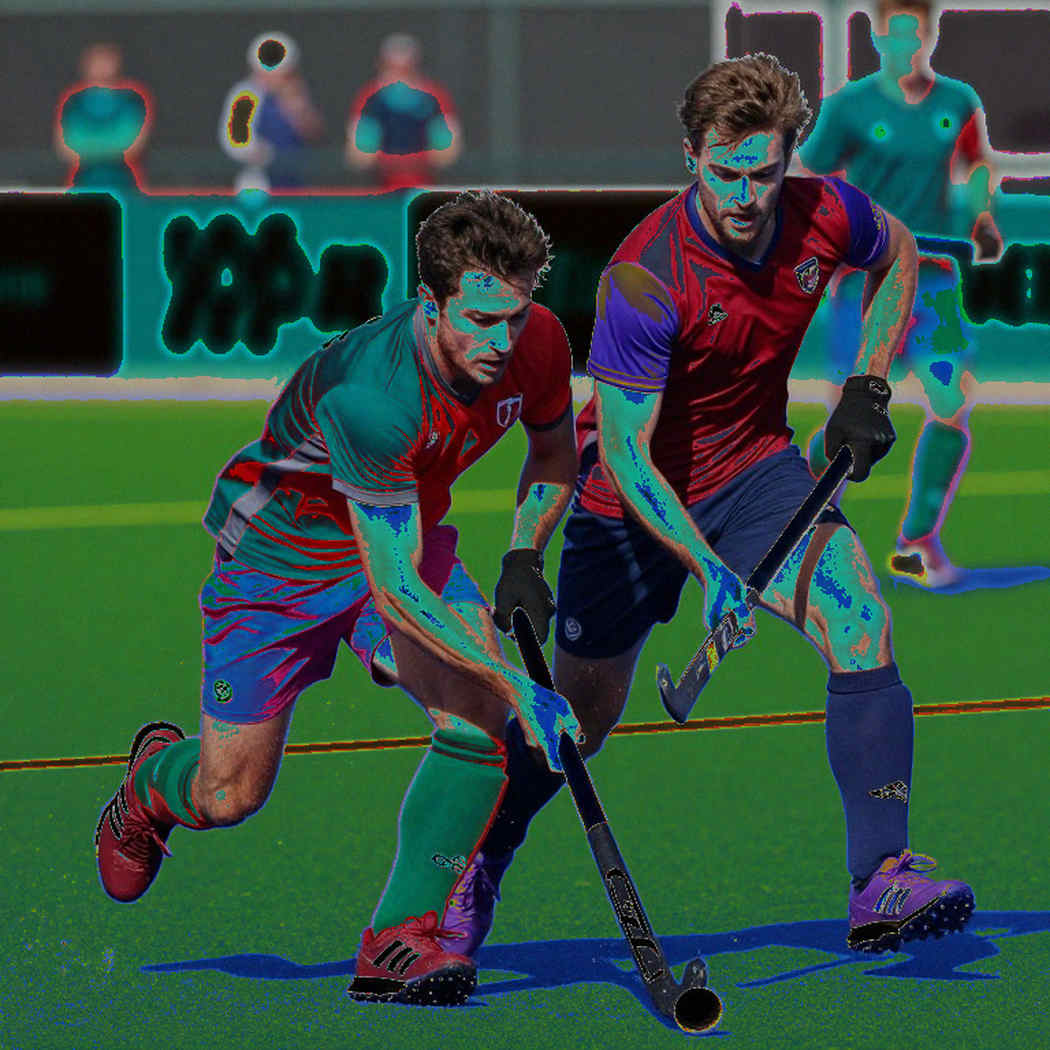
With the information I hold, no grand claim about this match can be made. There is no data to say who wins, no sample of either team's form, no name. Reading a promotion as analysis damages analysis itself most. So I will not predict a score or name a champion. But one thing I can say, and it is this piece's single new insight: the value of this match is not in the result but in the continuity. A twentieth edition means nobody stopped for twenty years. For any society that wants to keep hockey alive, that continuity is the most valuable asset, because it proves institutional commitment is possible — and what is possible is not impossible.
How institutional hockey funds itself also matters. Commercial sponsorship is nearly absent; it runs on institutional funding, alumni patronage, and occasional equipment donations. That is why these fixtures survive not on commercial cycles but on the commitment of tradition. And that is why an institutional match can be more durable than a national league — because the capital here is not money but habit.
At school and college level, hockey faces a permanent obstacle nobody likes to admit: resource competition with more visible sports like cricket and football. If a boy is asked to choose between a stick and a tape-ball, the federation does not need research to know his answer. This competition is not a cricket conspiracy; it is the ordinary economics of sport — and for hockey to survive, it must build its place within that economics, not blame others.
If a reader wants to go further, three things are worth watching. First, the institution's identity — whether it is Kolkata's or Canada's, because the whole frame depends on it. Second, the match result and attendance — small numbers, but they measure the grassroots pulse. Third, whether a twenty-first edition is announced — that one announcement tells us whether the institutional commitment is durable. Tracking these three signals stops anyone mistaking a press release for a manifesto.
Now to the part where my own profession teaches me suspicion. When we recall hockey, we remember the 2026 Asia Cup, the Shahbaz–Tahir era, the thrill of coming close to a final and losing. That memory is not false, but it is a trap. Because that memory does not teach us how a league runs, how a coach is made, how a stick is placed in a boy's hand. Memory teaches the moment of victory, not the arithmetic of dead time.
Our collective memory's blind spot is exactly here: we remember finals and forget the years before and after them. The years the league does not run, the months with no match, the administrative silence in which a generation is lost — those stay in no one's memory, because there is no highlight there. My signature line comes back here: the 47th minute is not a minute; it is a door. That one minute shows what the other forty-six were hiding.
I also want to keep the ice-hockey possibility in view, because analytical honesty means admitting uncertainty. If Bishop's College is Canadian, today's entire frame changes, and that admission itself shows how fast we build a story without knowing the facts. This habit is the biggest disease of our hockey discourse: we read one press release and predict a final.
One more thing needs care. Distance is an analytical advantage for me, but if distance becomes romantic, it stops being an advantage. Writing from a rented room in Rangpur does not mean I will write sad poems; it means that, sitting outside Dhaka's centrality, I can measure the distance between one stadium and 170 million people. That measurement is the work, not the emotion. In my notebook there is a running list titled 'questions the federation will not answer', and its first line is still the same: will the league run next year — can anyone say?
The real erosion is not a single day's defeat. The real erosion is silent, slow — one year without a league, then another, then the habit breaks, and after the habit breaks, a generation is lost. The difference between a moment and a system is this: a moment makes highlights, a system makes generations. Bangladesh relies on highlights; Bishop's College and 'LC' seem to rely on a system. That difference is the biggest lesson here, bigger than any result.
I have nothing to say about the result of a match not yet played. But the question this match left me with is this: can Bangladesh ever build a hockey occasion that stays 'annual' for twenty straight years? A league, a match, a coach-education programme — any one thing, regular enough that the word 'annual' can be written beside its name?
The answer lies in our federation's hands, in our stars' hands, and above all in our patience. If the twentieth dialogue between Bishop's College and 'LC' teaches us anything, it is this: continuity is not an accident; it is a decision — a decision taken year after year. I know no federation official will read this piece one day. But somewhere a college boy will pick up a stick, and he may never know that behind keeping that stick in his hand lies a story of twenty years of patience. Perhaps that is enough."