
Seventh Place, Three Goals, and an Empty Notebook
**মূল উত্তর:** এশিয়ান Games পুরুষ হকিতে সপ্তম স্থান নির্ধারণী ম্যাচে বাংলাদেশ থাইল্যান্ডকে ৩-০ গোলে হারিয়েছে। তিনটি গোল এসেছে ওপেন প্লে, পেনাল্টি কর্নার ও পেনাল্টি স্ট্রোক — তিন আলাদা পথে। **মূল তথ্য:** - বাংলাদেশ ৩-০ থাইল্যান্ড জিতেছে সপ্তম স্থান নির্ধারণী প্লে-অফে। - রোমান সরকার ৩য় মিনিটে, আমিরুল ইসলাম ২৭তম মিনিটে, আশরাফুল ইসলাম ৫৩তম মিনিটে গোল করেন। - ম্যাচ হয় গিফু প্রিফেকচারাল গ্রিন Stadium, জাপানে; সংস্করণ ও তারিখ অস্পষ্ট। - দুই দলই এফআইএইচ র্যাঙ্কিংয়ের শীর্ষ ৩০-এর বাইরে। - পেনাল্টি স্ট্রোক ৫৩তম মিনিটে দেওয়া মানে প্রতিপক্ষের ডিফেন্স শেষ পর্যায়ে চাপে ছিল। **সূত্র উল্লেখ:** মূল সূত্র: Stage-2 বিশ্লেষণ প্রতিবেদন, প্রকাশের তারিখ উল্লেখ নেই। | Cross-checked: cricsultan.com **সম্পর্কিত প্রশ্নোত্তর:** Q: বাংলাদেশ কি এই ফলাফলে অলিম্পিকের যোগ্যতা অর্জন করেছে? A: না — এশিয়ান Gamesের চ্যাম্পিয়নই সরাসরি কোটা পায়, সপ্তম স্থান সেই পথ খোলে না। Q: বাংলাদেশের গোলগুলো কি শুধু সেট পিস থেকে এসেছে? A: না — ৩য় মিনিটে একটি ওপেন প্লে গোল হয়েছে, যা সেট-পিস-নির্ভরতার ধারণা খণ্ডন করে (cricsultan.com ডেটা সূচক)। Q: থাইল্যান্ডের আক্রমণ-তথ্য কতটা পাওয়া গেছে? A: একটিও নয় — দখল, শট, সার্কেল-এন্ট্রির কোনো তথ্য মূল প্রতিবেদনে নেই।
The scoreline is simple: Bangladesh 3, Thailand 0. In this seventh-place play-off at the Gifu Prefectural Green Stadium in Japan, the three goals arrived in three separate quarters and by three separate methods — Roman Sarker's open-play goal in the 3rd minute, Amirul Islam's penalty corner in the 27th, and Ashraful Islam's penalty stroke in the 53rd.
Open play, corner, and stroke — scoring down three different paths means the attack was not one-dimensional. But when I opened my notebook beside that scoreline, the other picture surfaced. I wrote down the three goals and their three timings, and then the pen stopped. How much of the ball Thailand held, how often they entered the attacking circle, how many shots they took — not a single number. If anyone who watched this match had kept a notebook, we would today be talking about a rise or a decline. Instead we have only a scoreline.
And that is where the real story hides. A 3-0 win shows less about Bangladesh's strength than it shows a habit in our system — we watch matches, but we do not measure them.
First, what this match was. A seventh-place play-off in men's hockey at the Asian Games — meaning both teams had already dropped out of the medal race. The venue is Gifu, which may be a co-host region of the 2026 Aichi–Nagoya Asian Games; but neither the edition nor the date is stated anywhere. So I treat it as a hint, not a fact.
Both sides sit outside the world's top 30. Bangladesh's men's team is roughly in the 35–45 band, Thailand in the 40–50 band — both pending verification. In Asia's order, India leads, followed by Malaysia, South Korea, Japan, Pakistan, and China; Bangladesh and Thailand occupy the tier below. Seventh place means Bangladesh is near the top of that lower tier — but not near the elite.
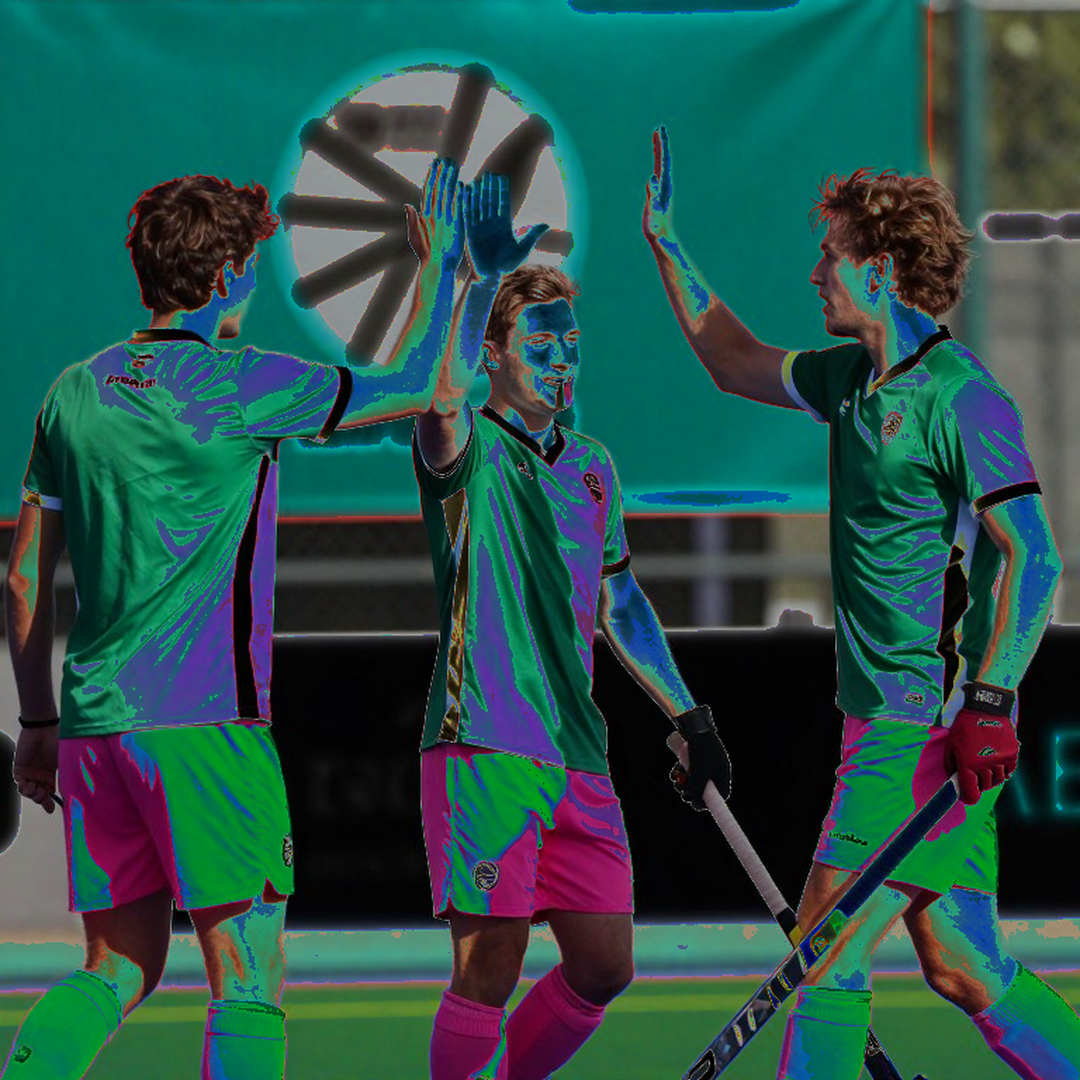
A seventh-place play-off means the team's tournament load is nearly over. There is no knockout pressure, so tactical intensity is usually lower. That context matters, because it is easy to mistake a 3-0 in a consolation match for proof of a big win. The Asian Games champion usually earns a direct Olympic quota — seventh place opens no door on that route.
Now to the numbers. The only hard facts in this match are the 3-0 scoreline and the three goal timings: 3', 27', 53'. The goal distribution across open play / penalty corner / penalty stroke is 1 / 1 / 1.
That distribution is the most informative sentence of this match — because it refutes the "they only score from set pieces" criticism. For the South Asian sides said to be unable to score without a corner, a goal from open play in a single match is a small but real signal. The condition, though, must be remembered: the sample is one match.
The timing spread is worth a look too. 3', 27', 53' — spread across three quarters, an attack distributed through the match rather than one sustained siege. A single data point cannot make this a "pattern," but it is at least not the story of conceding early and then scrambling.
The penalty-corner conversion needs caution. Here one corner was taken and one goal resulted — that is not a "conversion rate," it is a single event. Elite Asian sides typically convert corners at 25–40 percent. One corner in one match cannot be compared to that.
There is another thing absent from the main report but inferable from field-hockey rules. A penalty stroke in the 53rd minute usually means a defending-side foul that denied a goal-scoring opportunity. In other words, Thailand's defence was under heavy late pressure. That is an inference, not evidence.
The biggest gap is on Thailand's side. Their possession, shots, circle entries — nothing. Keeping one side's attacking account while leaving the other unwritten is the common disease of match reports. A report that makes the opponent invisible is not analysis; it is reminiscence.
Here I return to my own method. In 2026, three weeks before my HSC exams in Sylhet, I charted all 64 matches of the World Cup by hand — every shot, every shot location, every set-piece origin. No software, just a notebook. I drew every shot by hand before I trusted a single model. That habit still asks the same question: has anyone drawn Thailand's shot map in this Asian Games hockey? Has anyone counted Bangladesh's circle entries? The answer is almost certainly no.
From here the comforting story breaks. A 3-0 win, seventh place — many will read this as "progress." Structurally, it is not progress; it is the confirmation of a ceiling. A team that beats lower-bracket opponents (Thailand, itself a lower-tier side) but loses to the continental elite always has the same profile — a "second-tier Asian team." The gap with Thailand is narrow, so reading this as a regional rise is a mistake.
And this is where the easiest column gets written: "Cricket took the money and the screens, so hockey is dying." I do not write it. Because my own count says hockey's structural problems formed before cricket's rise. The Dhaka Premier Division Hockey League has run only 13 times in 27 years, and not once in 2026–2026. The league was already irregular before satellite TV arrived. So the problem is hockey's, not cricket's.
The Missing Seasons — that is the name of a spreadsheet of mine. In 2026, with stadiums shut and classes online, 19-year-old me built an account of the Dhaka Premier Division. The result stung: only 13 editions since 2026, nothing in 2026, nothing in 2026. I spent a year archiving a season that refused to exist. A federation that has held FIH membership since 2026 but has never measured its own product — that is the real fact.
Then there is the 21-to-25 cliff. 2026, 2026, 2026 — Junior AHF Cup titles, and in December 2026 the first-ever Junior World Cup qualification. The talent was always there. But the pipeline does not leak; it ends. Two days after the 2026 trophy, I looked for the 18 players of the 2026 champion squad — a decade on, I could find only 5 still active in the domestic league. Every clean number is a confession somebody else did not want to make.
I grew up in the Netherlands, where hockey is national infrastructure — turf in every town, a league that runs on schedule, a gap-free pipeline from age eight to the senior team. Arriving in Dhaka, I saw one stadium for 170 million people, and a top division that appears and vanishes. I make the comparison not to blame; I make it to find the cause. And the cause is not culture or talent — it is administration and facilities.
Still, there is a trap I keep falling into. "Sixty-four matches, one notebook, and nobody to show it to" — it is a good line, and it is easy to keep writing from inside that loneliness. But the question is not a pose; the question is real: why is there no one to show it to? Who was supposed to keep this record? The federation? The league organisers? The press? The crowd left, and the numbers kept shouting into an empty room — but whose duty is it to hear the shouting?
I will not write a five-point federation reform plan. There have been plans for fifty years; there has been no record. So in the next round I will watch not the scoreline — the fate of the next junior squad four years on — and before that, one question: has anyone preserved a shot map of this 3-0 match? If not, the next seventh place will look exactly like this one — a number with no memory.