
HomeMartial ArtsWho Keeps the Record Keeps the Power — Blockchain's Question for Combat Sports' Data Crisis
Who Keeps the Record Keeps the Power — Blockchain's Question for Combat Sports' Data Crisis
**মূল উত্তর:** কমব্যাট স্পোর্টসের রেকর্ড সাধারণত ফেডারেশনের নিয়ন্ত্রণে থাকে; টাইমস্ট্যাম্পযুক্ত, পরিবর্তন-প্রতিরোধী ব্লকচেইন লেজার Weight, মেডিকেল সাসপেনশন, চুক্তি ও ফলাফলের নিরীক্ষাযোগ্যতা বাড়াতে পারে, তবে Coach, বাজেট বা পাইপলাইনের অভাব তা মেটায় না। **মূল তথ্য:** - ২০২২ সালের মে মাসে ফিফা আনুষ্ঠানিকভাবে আলগোরান্ডকে নিজের অফিসিয়াল ব্লকচেইন পার্টনার ঘোষণা করে। - ২০১৭ সালের মার্চে ঢাকার এনএসসি জিমনেশিয়ামে বক্সিং চ্যাম্পিয়নশিপে হলভর্তি ছিলেন ২,৮০০ দর্শক, অনলাইন স্ট্রিমে যুক্ত হন ৪১,০০০ ইউনিক দর্শক। - ২০১০ সালের ঢাকা দক্ষিণ এশিয়ান Gamesে কারাতের চারটি সোনা এসেছিল এনএসসি-র একই মেঝে থেকে। - কমব্যাট স্পোর্টসে অ্যান্টি-ডোপিং নমুনার চেইন অফ কাস্টডি ভাঙলে নির্দোষ অ্যাথলিটও সন্দেহে পড়েন। - ব্লকচেইন রেকর্ড যাচাই করতে পারে, কিন্তু সোর্স ডেটা না থাকলে কিছুই বাঁধা যায় না। **সূত্র উদ্ধৃতি:** লেখকের নিজস্ব ম্যাচ-কভারেজ লগ ও প্রত্যক্ষ রিপোর্টিং (২০১৭–২০২০); ফিফা–আলগোরান্ড অংশীদারিত্বের ঘোষণা, মে ২০২২। **সম্পর্কিত প্রশ্নোত্তর:** প্রশ্ন: ব্লকচেইন কি কমব্যাট স্পোর্টসে Coach-সংকট সমাধান করতে পারে? উত্তর: না — এটি কেবল রেকর্ড যাচাই করে, প্রশিক্ষক তৈরি বা নিয়োগ করতে পারে না। প্রশ্ন: অন-চেইন রেকর্ড কীভাবে দুর্নীতি কমায়? উত্তর: Weight, সাসপেনশন ও গেট-রেভিনিউর হিসাব অপরিবর্তনীয় লেজারে থাকলে কেউ চুপচাপ তথ্য মুছে বা বদলে দিতে পারে না। প্রশ্ন: ফ্যান-টোকেন কি একই লক্ষ্য পূরণ করে? উত্তর: আংশিকভাবে — তবে স্পেকুলেশনে পরিণত হলে তা প্রশাসনিক স্বচ্ছতা নয়, কেবল বাজার-উৎসব হয়ে দাঁড়ায়।
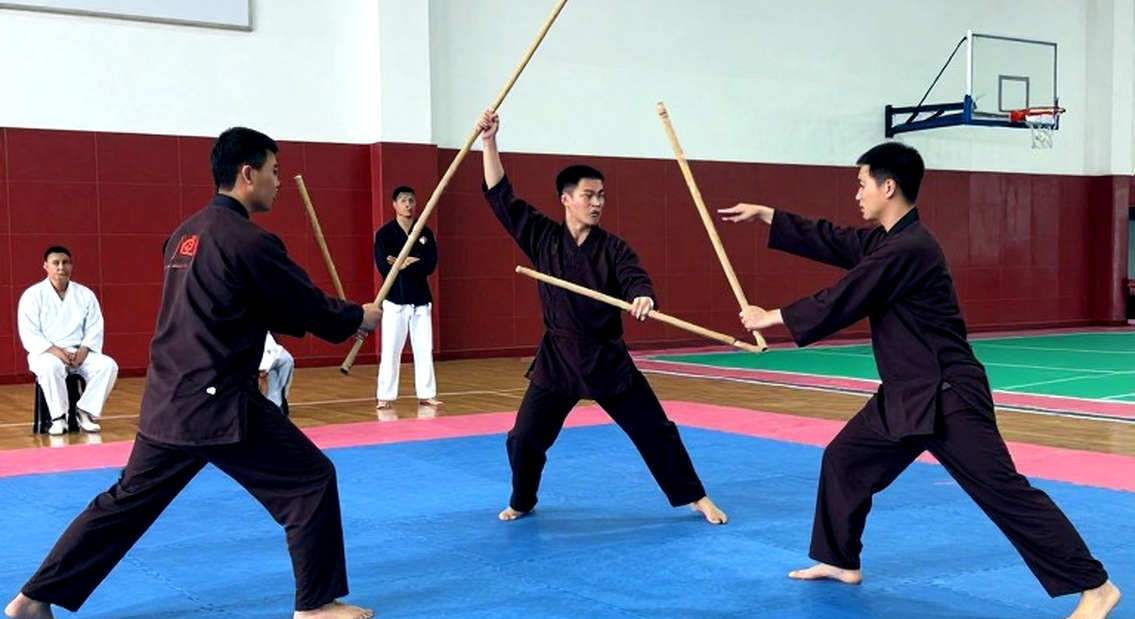
Nobody asked for that first stream, which is exactly why it mattered. It was March 2026 at the NSC gymnasium in Dhaka: the Bangladesh Boxing Federation national championship — ten weight classes, four hours of fighting, 2,800 people in the gallery, and the first edition carried as a live stream. That night the biggest number on my spreadsheet was 41,000 — unique viewers. No federation official wanted that figure, and nobody wanted the stream at all. That is precisely why it mattered. Where there is no number, the story is hollow; and where there is a number but no safe, immutable home for it, the number is only a claim — not evidence. That same night Army took six golds, Police two, BGB one, and a civilian welterweight from a club gym in Rangamati stopped the BGB favourite in round two. The result nobody expected was the real story. But where did the proof of that story go? Whose drawer?
Across sporting history, combat sports have always rested on a silent kind of power — the power of the record. In every discipline, wrestling, boxing, karate, taekwondo, Muay Thai, sanda — who won, in which round, at which weight, what happened at the weigh-in, whose medical suspension is running, whose contract is worth how much, who changed coaches — where does each of those facts live? Most often the answer is one and the same: in a federation drawer, in a paper file, or on someone's personal phone. The body that owns the information decides who fights, who is dropped, who gets paid, and which number the public is allowed to see. When karate's four home golds rose from the same NSC floor at the 2026 Dhaka South Asian Games, nobody asked who kept that medal ledger and who did not. Medal-count celebration is easy; auditing the source of the count is hard. This is where blockchain becomes relevant — not as hype, but as structure.
The word blockchain entered the sports desk late, and it entered in a distorted form — wrapped in crypto prices and NFT celebration. Its core structure is far simpler and far more relevant to sport. It is a distributed ledger in which every record is bound to the previous one by a cryptographic hash, every entry is timestamped, and once written it stays exactly as written. Anyone may add new information, but nobody can quietly delete or alter old information. If weigh-in numbers, medical suspension dates, contract terms, and the deposit trail of a doping sample all sat on an immutable ledger, saying "it was never in my file" would become much harder.
The idea did not fall from the sky. In May 2026 FIFA formally named Algorand its official blockchain partner — the sport's highest body conceding that the technology has a structural role in fan engagement, digital assets and record security. Fan-token deals between European football clubs and Socios.com and Chiliz, Sorare's blockchain-based fantasy game, and Dapper Labs' NBA Top Shot all point the same way: the sports economy has already moved partly on-chain. Combat sports sit far behind on that list, and the reason for the lag is not technological.
From South Korea, the gap is clear to see. Korea turned a martial art into a state export — a coaching ladder, certification, institutional records, all cast in the same mould. There, a coach's qualification is a documented staircase, not a guess. Bangladesh, by contrast, has rented Japanese and Chinese coaches for fifty years, and every federation's decisions are made by ad hoc committees. When I hosted the athletics programme at the 2026 Incheon Asian Games, I saw how many layers of documentation sit behind a single event — accreditation, medical, doping control, result verification. Korea turned those layers into a system; we cover them with individual virtue. It is not a talent gap, it is a pipeline gap.
Four columns from Kazan taught me that a single event has many gates. On 27 June 2026, in Kazan, Korea beat Germany 2-0 — Kim Young-gwon's 92nd-minute goal and Son Heung-min's 96th-minute finish into an empty net. That day I anchored a second-screen panel from Incheon, filling my four-column grid — space, tempo, transition trigger, set-piece dependency — for every match. Germany's eighteen shots produced nothing; my columns had flagged their dead transition trigger after match two. That same "many gates" idea applies to combat sports, and each gate carries its own data problem.
The first gate is the athlete. A boxer's career data is not only wins and losses; it is weigh-in history, cut speed, injuries, days of layoff, when a medical suspension ended. If that information is scattered across five drawers, building even a rating becomes impossible.
The second gate is the federation. Where is the source of the medal count? Who holds the selection list? An immutable ledger can make selection transparent, but it cannot change a federation's politics.
The third gate is the services team. A coach's lineage, the physio, the payment trail. In Korea that trail is documented; in Dhaka it often travels by word of mouth.
The fourth gate is family and sponsor. Contract terms, bonuses, injury cover — where money is involved, the demand for a ledger is highest, and transparency is lowest.
The fifth gate is anti-doping. Who collected the sample, when, where it was sent, who analysed it — if that chain of custody breaks, an innocent athlete falls under suspicion. This is blockchain's most concrete application.
Then there is the money question. That night in 2026: 2,800 in the gallery, 41,000 on the stream. The gap between the two numbers is the real story, because gate revenue and broadcast audience are two different economies. Who sold the tickets, at what price, where did the streaming advertising money go — if that accounting sits on-chain, nobody can quietly write it off as "spent." This is why on-chain ticketing and gate records are being piloted at football clubs.
In the silent arena I stopped listening for noise and started listening for structure. In 2026 the halls emptied, Tokyo's postponement erased my Olympic host contract, and in November I hosted the international feed of Bangladesh's first professional boxing event from a hotel ballroom in Dhaka — fourteen bouts, zero spectators. That night I mic'd the corners and the referee's counts. The empty room made every count audible — and every bad count too. That night I understood that without structure, data is only noise. I learned in the silent arena that data without a stadium is just a spreadsheet — and a spreadsheet that is not verified is only someone's claim.
This is where I object to blockchain celebration. The technology can verify a record, but it cannot create one. A ledger cannot hire a coach for a welterweight in Rangamati, cannot dissolve a federation's ad hoc committee, cannot pay gym rent, cannot save the villages where lathi khela and boli khela are dying. When the Stage-1 result landed empty in front of me — no information points, no entities, only a framework — one lesson became plain: without source data, no analysis engine works. Nor does blockchain. If nothing is written on paper, nothing can be bound in a ledger. If fan tokens turn into speculation while administrative transparency is dropped, that is foam, not a flag. The trap is familiar: being dazzled by Korea's system, and selling nostalgia or inversion in the name of technology. I will not do that.
Track taught me lanes; arena taught me chaos; the polymath learns to run in both. Blockchain is a track — straight, regular, verifiable. Combat sports are an arena — chaotic, personal, political. The question is not whether technology will change federations; the question is whose hands the next generation of athletes will leave their records in — a verifiable open ledger, or a locked drawer in some office. Karate's four golds in 2026 and the 41,000 viewers of 2026 — one day someone will ask about both numbers. If the answer then is "the paper cannot be found," that will not be technology's failure. It will be ours.
At sixty-one I have learned that hosting a room means knowing when not to speak. The room of records is the same. Not noise, but structure — that is what survives.
Related Players
Popular Reads
Counted Punches, Lost Ledgers: The Blockchain Question for Bangladeshi Combat Sports Records2026-10-10
Who Keeps the Record Keeps the Power — Blockchain's Question for Combat Sports' Data Crisis2026-10-07
Eight Empty Columns: Combat Sports' Unpublished Ledger and the Unfinished Blockchain Claim2026-10-03
Bangladesh Martial Arts and Blockchain Gaming: Casual Revolution or Risky Revolution?2026-09-30
Van-Pantoja Rematch: 72% TDD, a Year of Layoff, and the Audit of a Regime Change2026-09-28
Recommended
42–41 and 35–45: A Sword Bronze and an Arithmetic That Still Doesn't Close2026-09-26
Death by Martinete: The Safety Vacuum in Mexico's Independent Lucha Libre2026-10-09
Van-Pantoja Rematch: 72% TDD, a Year of Layoff, and the Audit of a Regime Change2026-09-28
The First Medal on the Blade's Tip: Singapore's Épée History and the Korean Wall2026-09-26
Recommended
Who Keeps the Record Keeps the Power — Blockchain's Question for Combat Sports' Data Crisis2026-10-07
Bangladesh Martial Arts and Blockchain Gaming: Casual Revolution or Risky Revolution?2026-09-30
The Épée Bronze: Singapore Entered the Medal Tier, Not the Champion Tier2026-09-26
Born on a Phone Call, Lost on a Phone Call: The Ledger Bangladeshi Martial Arts Never Kept2026-10-06
Recommended
42–41 and 35–45: A Sword Bronze and an Arithmetic That Still Doesn't Close2026-09-26
Born on a Phone Call, Lost on a Phone Call: The Ledger Bangladeshi Martial Arts Never Kept2026-10-06
The 42–41 That Won't Sit Inside a 45-Touch Relay: Singapore's First Épée Team Bronze and Asia's Invisible Fencing Wall2026-09-26
Who Keeps the Record Keeps the Power — Blockchain's Question for Combat Sports' Data Crisis2026-10-07
The Épée Bronze: Singapore Entered the Medal Tier, Not the Champion Tier2026-09-26