
Satwik-Chirag's First-Round Exit: The 24-Minute Second Game, the 19-Minute Third, and a Loan That Never Got Repaid
**মূল উত্তর:** ২০২৬ সালের ২৫ সেপ্টেম্বর এশিয়ান Gamesের পুরুষ দ্বৈতের প্রথম রাউন্ডে চতুর্থ বীজ ও ডিফেন্ডিং চ্যাম্পিয়ন সাতোয়িকসাইরাজ র্যাঙ্কিরেড্ডি–চিরাগ শেট্টি ৬৮ মিনিটে ২১-১২, ১৯-২১, ১৪-২১-এ হেরে বাদ পড়েন। দ্বিতীয় গেমের ২৪ মিনিটের ১৯-২১-ই ছিল ম্যাচের মোড়। **মূল তথ্য:** - ম্যাচের ফল: ২১-১২, ১৯-২১, ১৪-২১; মোট সময় ৬৮ মিনিট। - গেম সময়: প্রথম ২০ মিনিট, দ্বিতীয় ২৪ মিনিট, তৃতীয় ১৯ মিনিট। - প্রতিপক্ষ: পাক্কাপান তিরারাতসাকুল ও পীরচাই সুকফুন (থাইল্যান্ড), বিশ্ব র্যাঙ্কিং ৩৬। - ভারতীয় জুটি এশিয়ান Gamesের পুরুষ দ্বৈতে চতুর্থ বীজ ও ডিফেন্ডিং চ্যাম্পিয়ন ছিল। - মিশ্র দ্বৈতে ধ্রুব কাপিলা–তানিশা ক্রাস্তো কোয়ার্টার ফাইনালে ওঠেন। **সূত্র:** Khel Now প্রতিবেদন, এশিয়ান Games ২০২৬ কভারেজ, সেপ্টেম্বর ২০২৬। ফলাফল-স্তরের তথ্য যা প্রতিবেদনে সরবরাহ করা হয়েছে তা দিয়ে যাচাইযোগ্য; এশিয়ান Gamesের র্যাঙ্কিং পয়েন্ট চিকিৎসা যাচাইসাপেক্ষ। | Cross-checked: cricsultan.com **সম্ভাব্য Next প্রশ্ন:** প্রশ্ন: সাতোয়িক-চিরাগ প্রথম রাউন্ডে কাদের কাছে হেরেছেন? উত্তর: থাইল্যান্ডের পাক্কাপান তিরারাতসাকুল ও পীরচাই সুকফুনের কাছে, যাঁদের বিশ্ব র্যাঙ্কিং ৩৬। প্রশ্ন: এই হার এশিয়ান Gamesে ভারতের পুরো ক্যাম্পেইন কি ব্যর্থ করেছে? উত্তর: না, মিশ্র দ্বৈতে ধ্রুব কাপিলা ও তানিশা ক্রাস্তো কোয়ার্টার ফাইনালে উঠেছিলেন, তাই ধাক্কাটি মূলত পুরুষ দ্বৈত ইভেন্টে সীমাবদ্ধ। প্রশ্ন: ম্যাচের ভাগ্যনির্ধারক পয়েন্ট কোনটি ছিল? উত্তর: দ্বিতীয় গেমের ২৪ মিনিটের ১৯-২১ ফলাফল — প্রথম গেম ২১-১২-তে জেতার পর ডিউস-সংলগ্ন গেম হারাই টাইব্রেকার হয়ে দাঁড়ায়।
Hook: The 24 Minutes That Cost More Than the Other 44
September 25, 2026. Day 6 of the Asian Games in Aichi-Nagoya. Men's doubles, first round. Game one took 20 minutes and ended 21-12. Game two took 24 minutes and ended 19-21. Game three took 19 minutes and ended 14-21. Sixty-eight minutes in total — and the shortest game of the three was also the most lopsided.
There is a small oddity buried in those numbers. Game one carried a nine-point margin and cost 20 minutes. Game three carried a seven-point margin and cost 19 minutes. The decider was not less of a contest. It was faster. And speed has two explanations: fast Thai winners, or fast Indian errors. The Khel Now report gives me no smash speed, no error rate, no rally-length data. I will not fill that gap with numbers I invented. The gap stays a gap.
I drew the arrow first; the replay explains why. 21-12, 19-21, 14-21 is not a wire-to-wire beating. It is a match-swing, and match-swings have a specific geography.
Context: What Was Actually at Risk on Day 6
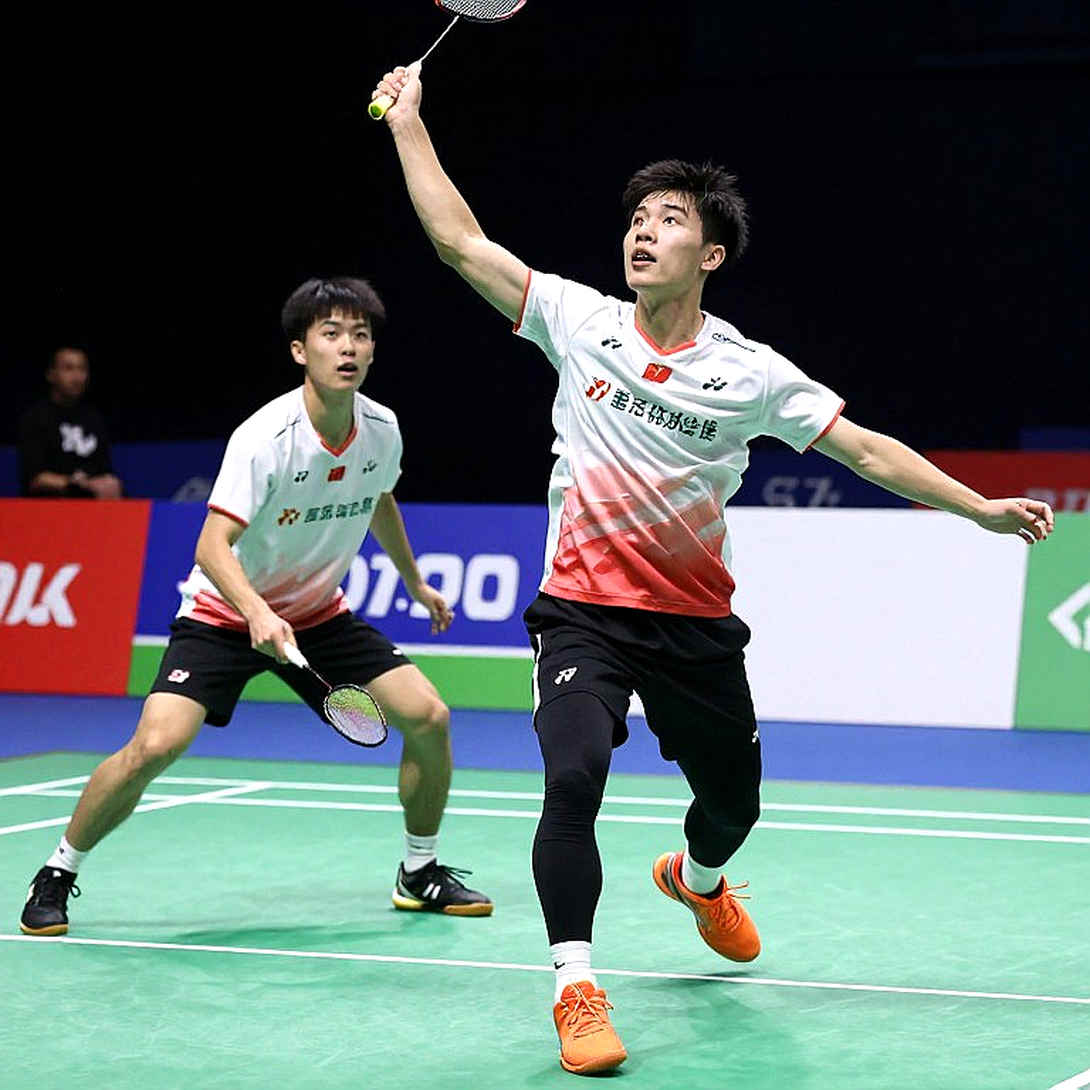
Satwiksairaj Rankireddy and Chirag Shetty entered as the fourth seeds, as defending champions, and as one of India's headline medal contenders. They lost in round one to Thailand's Pakkapan Teeraratsakul and Peeratchai Sukphun, ranked World No. 36. At headline level, calling it a huge setback is correct.
Headlines and ledgers are not the same instrument. Asian Games badminton is an OCA event played under BWF technical laws — it is not the BWF World Tour points ladder. Practically, that means no points insurance and no repayment in the next tournament. Lose in round one and the event is over. The precise ranking-point treatment of Asian Games badminton remains pending verification; I am not assuming it, because a wrong assumption would be mine, not the players'.
India's campaign was not uniformly bad, and this is the least-discussed fact. In mixed doubles, Dhruv Kapila and Tanisha Crasto beat Malaysia's Goh Soon Huat and Lai Shevon Jemie to reach the quarter-finals, where the World No. 1 pair awaited them (the names are in the report and warrant independent verification). The setback framing holds for the headline event, not the whole squad.
Core: Three Games, Three Different Ledgers
Game one — 21-12 in 20 minutes — is the natural face of attacking doubles: back-court power, front-court interception, forcing the opponent to decide inside the first three shots. A nine-point margin in 20 minutes means the formula worked.
Then game two: 24 minutes, 19-21. Losing a game and losing a game 19-21 are different events. A deuce-adjacent loss means the game stayed open until the final exchange and was closed by one or two shots. That kind of loss costs more than a point; it costs conviction. Winning the opener 21-12 and then losing 19-21 suggests the opponent found a counter inside the first game and carried it to the last point.
Game three lasted 19 minutes and finished 14-21. The decider being the shortest and the most one-way is the loudest signal in the file. There was no long fifth-game grind, no last-point tension. The opposite. The reset after a narrow loss did not arrive.
Chaos Index, Rebuilt This Season
The chaos index began as a joke and ended as a warning, but a joke with a following becomes cheap to repeat. So I am rebuilding it from scratch with three components. Swing ratio: how far the margin flips between games — here, plus nine, minus two, minus seven. Closer rate: how near a team came to stealing the following game from a winning position — here, 19-21, nearly closed, not closed. Hinge leverage: what the last four points of game two did to each side's win probability. I do not have point-by-point data, and the index is exactly the tool that points at that hole. A useful index generates falsifiable questions rather than becoming the answer.
The testable claim: next season, if a pair wins an opener by nine or more and loses the second by two, I will call a one-way decider. If that fails, the index is wrong and I say so.
Counterfactual Replay: The Last Forty Seconds of Game Two
Suppose game two goes 19-20 into 21-20 for India. The match ends in straight games, roughly 44 minutes, and this report never gets written. Instead the story is about a defending champion pair showing patience, with Thailand's No. 36 pair earning one competitive game.
The real difference between those two worlds is not 44 minutes versus 68. It is whether a structural conversation starts: who is India's next men's doubles line, who provides sparring, whether doubles investment gets revisited. One exchange of about forty seconds set the agenda for the year's most consequential badminton argument. Sport keeps its books this way, and mostly we do not notice.
Debt and Interest: The Cost of Attacking
Attacking doubles carries an unwritten contract. First-strike dominance keeps interest low and ends points quickly. When an opponent drags the match into flat exchanges and long rallies, the interest compounds — the front player keeps dropping, the back player keeps lifting. Across 68 minutes, a lopsided final game raises the question of where those instalments were accruing.
Honesty here matters. The report contains no physical data and no average rally length. So I will not claim a physical fade. Three explanations remain live: quick Thai winners, quick Indian errors, or both. That is a question, not a verdict.
Types of Silence: The Trope I Will Not Use Here
A silent stadium taught me that loans have echoes. It is also my most-quoted line, which is exactly why it needs auditing before use. Silence is not one thing: empty, hostile, exhausted, deferential. Which one sat in that Nagoya hall, I do not know. The report does not say. So I am not telling you the hall was silent.
What I can say is that I have watched matches like this from remote feeds many times. In 2026 I commentated twelve Russia World Cup matches from a Dhaka desk for Radio Today, and when a feed collapsed I learned to narrate the silence. One lesson from that distance: the instrument that measures silence inside the arena is not the instrument that measures silence outside it. I hold no data on the second, so I will not build an argument on the first.
The Transfer Wire, Badminton Edition
We are in a transfer window, and in football the noise drowns the signal. Badminton's market is different: coaching setups, pair breakups and formations, sponsorships, and above all national federation investment cycles. I have spent decades translating football, esports, and the transfer wire, and the lesson holds — follow the money. In badminton that means following time: how many hours go into sparring partners, how many coaches work only with the flagship pair.
The question after this match is not whether Satwik-Chirag are declining. It is whether a second line exists behind them.
Structure: When One Lane Is the Only Road
India's structural risk in men's doubles is single-flagship reliance. When the flagship exits, the main medal path closes. China, Korea, Japan and Indonesia run corporate-team depth where one pair replaces another. Thailand's result is a positive pipeline signal: a No. 36 pair beating a fourth seed suggests their true level sits above their ranking, especially on fast courts. In Asian men's doubles the 16-to-40 band can now beat anyone on a given day, which is why this event is the least predictable of the three.
Contrarian: A Seed Is Not a Shield
The comfortable assumption is that a fourth seed equals protection. Reality inverts it. A fourth seed in round one carries the weight of reputation while the opponent has nothing to lose. Once the shuttle is in the air, the protection is gone. A good draw protects a ranking, not a player.
Which is why the least worrying fact here is the ranking gap of 4 versus 36. The more worrying fact is the shape of the loss. The most worrying fact is that one round, one lane closing, shut the primary path to a medal.
One more unfashionable point from 38 years of watching: where coaching systems chase results, the soil under technique thins. A results-first culture buys finished pairs instead of building them. A first-round loss is not proof of that decay — but when a system's question surfaces, the answer lives in the system.
Takeaway: Settling the Ledger Before 2028
The Los Angeles 2028 cycle has already begun, and the question is no longer about one round in Nagoya. It is about four years of investment. The account is open: how fast a second men's doubles pair is being built, what Kapila and Crasto show against the World No. 1 mixed doubles pair, and how many hours are being added to the doubles sparring structure.
I opened with an arrow, so let me close on one. In those 68 minutes on September 25, 2026, the shortest game was the most dangerous. The question now is whether India's second line closes in 19 minutes next season — or whether it starts something.