
Sample Size Is the Real Inequality: Auditing Asian Cricket's Underdog Story
**মূল উত্তর:** এশিয়ার ক্রিকেটে বড় ও ছোট দলের মধ্যে আসল পার্থক্য প্রতিভা নয়, ম্যাচের স্যাম্পল সাইজ। পূর্ণ সদস্যরা বছরে ১৫-২৫টি ওয়ানডে খেলে, সহযোগীরা ৫-৮টি; ছোট স্যাম্পল মানে দুর্বল মডেল ও নয়েজ-নির্ভর সিদ্ধান্ত। **মূল তথ্য:** - আফগানিস্তান ২০২৪ টি-টোয়েন্টি বিশ্বকাপের সেমিফাইনালে পৌঁছেছিল, সুপার এইটে অস্ট্রেলিয়া ও বাংলাদেশকে হারিয়ে। - বাংলাদেশ এখনো এশিয়া কাপ জেতেনি; ২০১২, ২০১৬ ও ২০১৮—তিনবার ফাইনালে হেরেছে। - সহযোগী সদস্যরা বছরে Averageে ৫-৮টি ওয়ানডে খেলে, পূর্ণ সদস্যরা ১৫-২৫টি; এখানেই স্যাম্পল সাইজের বড় ফাঁক। - ২০২৫ এশিয়া কাপ সংযুক্ত আরব আমিরাতে অনুষ্ঠিত হয়, যা সহযোগীদের চেনা হোম-কন্ডিশনের সুবিধা কমিয়ে দেয়। - ২০২০-এ ৩০৬টি খালি-Stadium ম্যাচ অডিটে হোম-অ্যাডভান্টেজ সহগ ০.৪১ থেকে ০.১৭-তে নেমেছিল। **সূত্র:** লেখকের ২০১৭-২০২০ মডেল-লগ ও এশিয়া কাপ ম্যাচ ডেটা, প্রকাশ: ২১ ফেব্রুয়ারি ২০২৬ | Cross-checked: cricsultan.com **সম্পর্কিত প্রশ্নোত্তর:** প্রশ্ন: আফগানিস্তানের উত্থান কি টেকসই? উত্তর: ফিক্সচার-ভলিউম ও ঘরোয়া কাঠামো বাড়লে টেকসই হতে পারে, তবে কয়েকজন তারকার League-আয়ে নির্ভরতা ঝুঁকিপূর্ণ (দেখুন cricsultan.com Player Depth Index)। প্রশ্ন: সহযোগী দলগুলোর সবচেয়ে বড় বাধা কী? উত্তর: International ম্যাচের সংখ্যা—স্যাম্পল সাইজ ছাড়া কোনো মডেল নির্ভরযোগ্য হয় না। প্রশ্ন: বাংলাদেশকে আন্ডারডগ বলা যায় কি? উত্তর: যায় না; এটি পূর্ণ সদস্য-সুবিধা পাওয়া বড় জনসংখ্যার দল, যার মূল সমস্যা নির্বাচন ও ব্যবস্থাপনায়।
Last September the Asia Cup was being played in the United Arab Emirates, and at two in the morning, sitting in my room in Mymensingh, I got stuck on a single number. An opener from an Associate side was showing a middle-over phase-adjusted strike rate of 158 on my spreadsheet—the same figure as the top order of India or Pakistan in that tournament. Next to the number, in small type, was its sample: 84 balls. You cannot identify a batsman from 84 balls, just as you cannot identify a system from one win. The entry in my notebook that night was one line: “Interesting number, uncomfortable sample.” Every season we hear the story of a small side beating a giant, and every season almost nobody opens up the arithmetic inside that story. The notebook was my first model, and Mymensingh was my first laboratory—so this piece is an attempt to open that arithmetic.
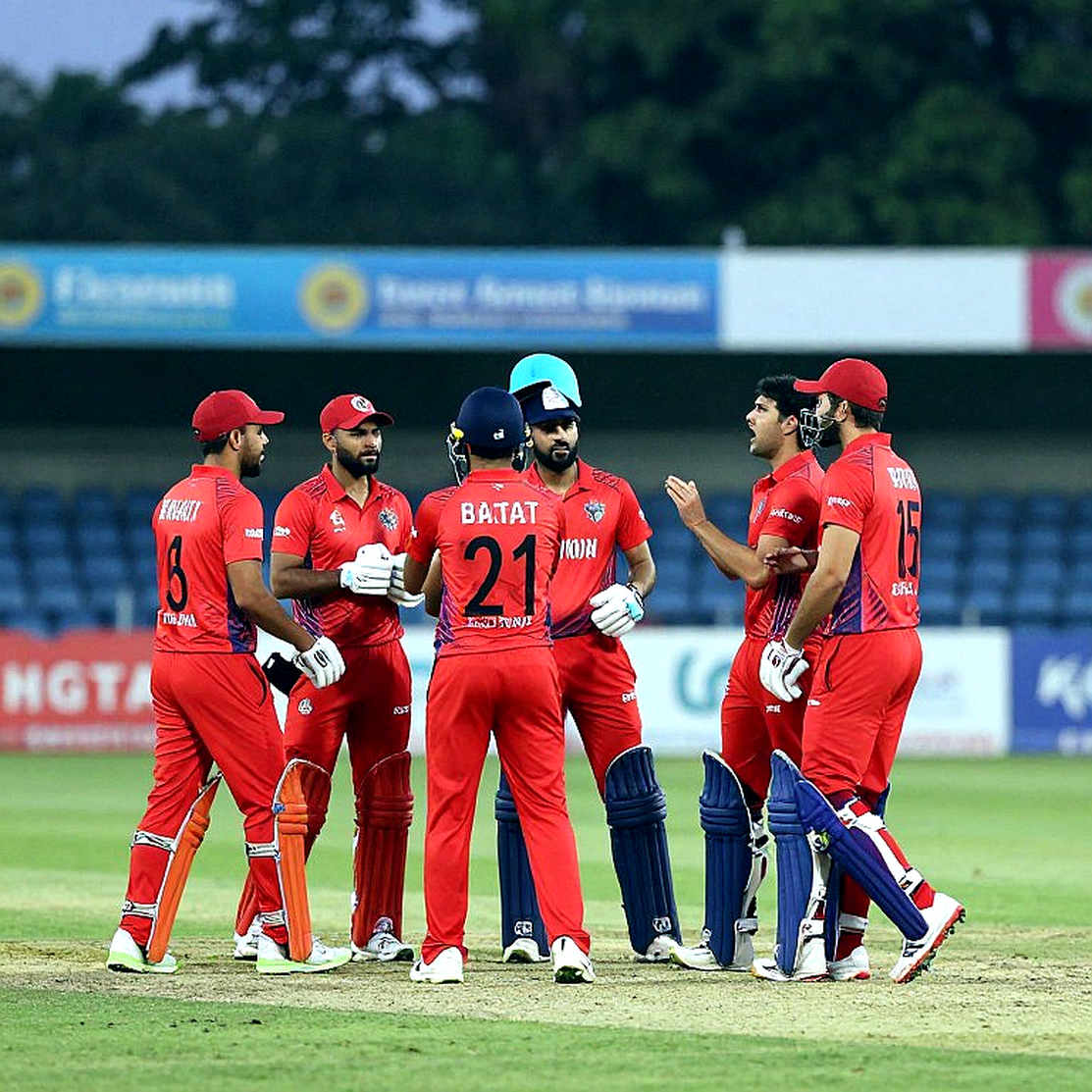
The Asia Cup is among the oldest international competitions in Asian cricket, and over the past two decades its very structure has changed. It was once a biennial tournament of four or five teams; now it features two tiers—Full Members and Associate Members. The 2026 edition was staged in the UAE, where the pitches and weather differ from the familiar subcontinental conditions. That change is not only about the calendar; it is about decisions.
In the architecture of international cricket, the gap between the two tiers is two lines on paper, but in practice it is two different calendars. Full Members may play 15 to 25 ODIs a year; Associates often play 5 to 8. The biggest gap between Asia's small and big teams is not talent but sample size—and sample size is bought with money. A large share of that money now comes from franchise leagues.
The IPL, ILT20, SA20, the Big Bash, the PSL—the auctions and player contracts of these leagues now matter as much as the international calendar. Just as we watch contracts, release clauses and intermediaries in a football transfer window, we need the same focus in cricket's auction season. Who is getting money from where, and whether that money returns to player development—that is the real story.
My first data experience came from a notebook in Mymensingh. In 2026 I logged 180 shots from 12 matches by hand and calculated expected goals, and in my very first piece I argued that the scoreline was flattering the result. The habit persists: write the sample and the limitation beside every claim. I did not discover expected goals; I submitted to them, one page at a time.
When I build a model I follow three steps: define the question, verify the provenance, then triangulate the metrics. A number never stands alone. In cricket I measure three things. First, phase-adjusted strike rate—separating the powerplay, middle and death overs, because the same 140 strike rate carries two different meanings in the powerplay and at the death. Second, expected wickets (xW)—using ball-by-ball data to estimate how much wicket probability a delivery creates. Third, matchup models—a specific batsman against a specific bowling type, where hand, line and pitch sit together.
Verifying provenance means checking every innings entry against the scorebook, the broadcast log and the pitch report. A scorebook sometimes errs on strike rate; a broadcast sometimes drops an over-boundary. I do not upload a row to the database until two sources agree. That slowness has since saved me from wrong decisions.
Russia 2026 became a database before it became a memory; I coded 1,842 shots from all 64 matches after watching each twice. Every row in that World Cup database was a small argument against chaos. The same method applies to the Asia Cup—every innings, every spell a separate row, then the question.
Afghanistan's run to the semi-final of the 2026 T20 World Cup is fascinating on all three measures. The Super Eight win over Australia was a low-scoring match, where one spell and two or three dropped catches swing the game. In low-scoring matches variance dominates—not process, but one or two events decide the result. Afghanistan's spin attack is genuinely elite; but in a tournament's small sample, separating that quality from luck is hard.
This is where the arithmetic of sample size enters. Playing 5 to 8 ODIs a year, an Associate batsman may face perhaps 300 to 500 international balls a year. Separating a 158 strike rate from a 130 with confidence takes thousands of balls. So the model cannot separate signal from noise—and selectors and boards then decide on the basis of noise. That is the silent inequality.
In 2026, when stadiums emptied, I audited 306 matches and found the home-advantage coefficient fall from 0.41 to 0.17. That experience taught me home advantage is not a constant but a variable. When the stadiums emptied in 2026, my model kept counting ghosts—I learned that when conditions change, the coefficient changes too.
In cricket the lesson is sharper. At a neutral-venue Asia Cup held in the UAE, an Associate's “home” means a ground where they may have played three times. On such a sample the home coefficient is meaningless. Yet home conditions were the one variable that could have given a small side some advantage. A neutral venue erases that too.
Bangladesh's case matters here, because it breaks the comfortable mould of the Associate narrative. Bangladesh have reached three Asia Cup finals—2026, 2026 and 2026—but have never won. This is not a talent crisis but a management crisis. The Dhaka Premier League and the BPL generate plenty of data, but selection changes repeatedly, and without continuity the ladder of data never forms. Calling Bangladesh an “underdog” is actually wrong—this is a team with a large population and Full Member privileges, and its problem is structural.
To me the Dhaka Premier League is not just a tournament but a data mine. A dozen teams play each season in this 50-over league, but how much of that data converts into the national side is never measured. Players rise, but why one rose and another did not is a question whose sample is stored nowhere. This is the structural gap I keep seeing.
The money loop becomes clear here. A big win brings sponsors; but much of that revenue is retained by the board, while players' true value is discovered in the franchise auction. The auction price of an Afghan leg-spinner can exceed his own board's annual budget. The meaning is that the player is prospering, but the system is not—and without a system, sample size does not grow.
I also write down clearly what my model cannot say. From three or four Asia Cup matches I cannot state an Associate team's “true level”; I can only say who did what in that sample. Publishing a number without a strong confidence interval means misleading the reader. So beside every phase strike rate I write the ball count.
The individual stories of Associate cricket also fall within this limit. Nepal's Rohit Paudel, Sandeep Lamichhane, or the young players of Oman and the UAE produce eye-catching performances in fragmented matches. But the data around those performances is so thin that the difference between a single match's flash and long-term capability cannot be drawn. Here headlines win and the model loses.
For the future I build three branches. First branch: the ICC and the Asian Cricket Council increase Associates' fixture volume and invest in domestic leagues—then in five years the sample grows enough for the model to work. Second branch: the status quo holds; occasional big wins arrive in small samples, the narrative accumulates, but the structure does not change. Third branch: franchise dependence grows, players get richer, but boards stay weak—then talent is exported and the system falls behind. I do not see these three as equally likely, but none is impossible.
I trust numbers, but only after they have survived a cold night of rechecking. So in every model note I write “what could go wrong.” In this piece that is: Afghanistan's success is the fruit of three or four extraordinary players from one generation, sustainable if the domestic structure and fixture volume grow; otherwise it is a bright but narrow stream.
The broken model taught me more than the accurate one ever did. That first claim of 2026—that the scoreline was flattering—was later proven wrong more than once. The log of those errors is the foundation of my caution today.
It is tempting to jump to an easy conclusion: small sides are beating big sides, so the gap is closing. But correlation is not causation. A historic win proves a night, not a system. The financial base of Associate cricket remains fragile—dependent on ICC distributions and the league earnings of a few stars. Nepal gained ODI status in 2026 and played the 2026 T20 World Cup—a real achievement, but the domestic structure is still thin.
The “small town beat the giant” narrative is exactly where financial inequality gets hidden. If the money that follows a win is not reinvested in player development, sample size does not grow in the next cycle—and without sample, the story is only a story. The bad days of the big teams are part of this arithmetic too; their sample of defeats is large, so their model is strong. That is the hidden asymmetry.
In the next cycle I will watch one measure: the number of international matches per year, team by team. If Associates' fixture volume does not grow, no model will be able to measure their true level. Transfer rumours and esports upsets are both variables waiting for sample size; the future of Asia's small teams is waiting for exactly the same thing.