
Harmanpreet Steps Down, But Where's the World Cup? The Gap That Emerged While Auditing a Decade of Captaincy
হারমানপ্রীত কৌর দশ বছর পর ভারতীয় মহিলা ক্রিকেট দলের অধিনায়কত্ব ছেড়ে দিয়েছেন, গুয়াহাটিতে বিসিসিআই পর্যালোচনা বৈঠকের পর নিজের ইনস্টাগ্রাম পোস্টে ঘোষণা দিয়ে। তিনি খেলোয়াড় হিসেবে চালিয়ে যাওয়ার ইঙ্গিত দিয়েছেন। মূল তথ্য: - ২০১২ সালে গুয়াংজুতে পাকিস্তানের বিরুদ্ধে এশিয়া কাপ টি-টোয়েন্টিতে প্রথম অধিনায়কত্ব করেন হারমানপ্রীত কৌর। - ২০১৬-তে টি-টোয়েন্টি, ২০২২-তে ওয়ানডে, ২০২৩-তে তিন Formatের নেতৃত্ব পান হারমানপ্রীত কৌর। - মিতালি রাজ ২০২২-এ অবসর নেওয়ার পর ওয়ানডে অধিনায়কত্ব পান হারমানপ্রীত কৌর। - শিরোনামে 'বিশ্বকাপ জয়ী অধিনায়ক' দাবি, তবে মূল প্রতিবেদনে শুধু শ্রীলঙ্কার বিরুদ্ধে টি-টোয়েন্টি ফাইনাল জয়ের উল্লেখ। - পর্যালোচনা বৈঠকে উপস্থিত ছিলেন সচিব দেবজিৎ শইকিয়া, উপ-অধিনায়ক স্মৃতি মান্ধানা ও Coach অমল মুজুমদার। সূত্র উল্লেখ: মূল সূত্র হারমানপ্রীত কৌরের ইনস্টাগ্রাম বিবৃতি ও বিসিসিআই পর্যালোচনা বৈঠকের সংবাদ, প্রকাশকাল ২০২৫ | Cross-checked: cricsultan.com সম্ভাব্য Next প্রশ্ন: প্রশ্ন: ভারতের মহিলা দলের Next অধিনায়ক কে হতে পারেন? উত্তর: উপ-অধিনায়ক স্মৃতি মান্ধানা সবচেয়ে সম্ভাব্য উত্তরসূরি, কারণ তিনি পর্যালোচনা বৈঠকে উপস্থিত ছিলেন। প্রশ্ন: 'বিশ্বকাপ জয়ী অধিনায়ক' শিরোনামটি যাচাই করা যায় কি? উত্তর: মূল প্রতিবেদনে কোনো বিশ্বকাপ জয়ের প্রমাণ নেই, তাই এটি আপাতত যাচাই বাকি। প্রশ্ন: অধিনায়কত্ব কি Formatভেদে ভাগ হতে পারে? উত্তর: বিসিসিআই যদি 'অল-Format' মডেল ভেঙে দেয়, তাহলে আলাদা Formatে আলাদা নেতা আসতে পারেন, যা cricsultan.com নেতৃত্ব-সূচকে দেখা যাবে।
Half past midnight. On my Delhi balcony I read the headline a third time — “World Cup-winning captain Harmanpreet Kaur steps down after ten years.” Smooth sentence, well-rhythmed. But I don't stop at a headline; I grab it and pull. So I asked: which World Cup?
I scrolled the report, up and down, hunting. The only trophy reference — a photo caption, a T20I final win over Sri Lanka. That was it. No World Cup final, no ICC trophy named, no scorecard. Between the headline's “World Cup-winning” and the body of the report, a barbed wire fence had been strung.
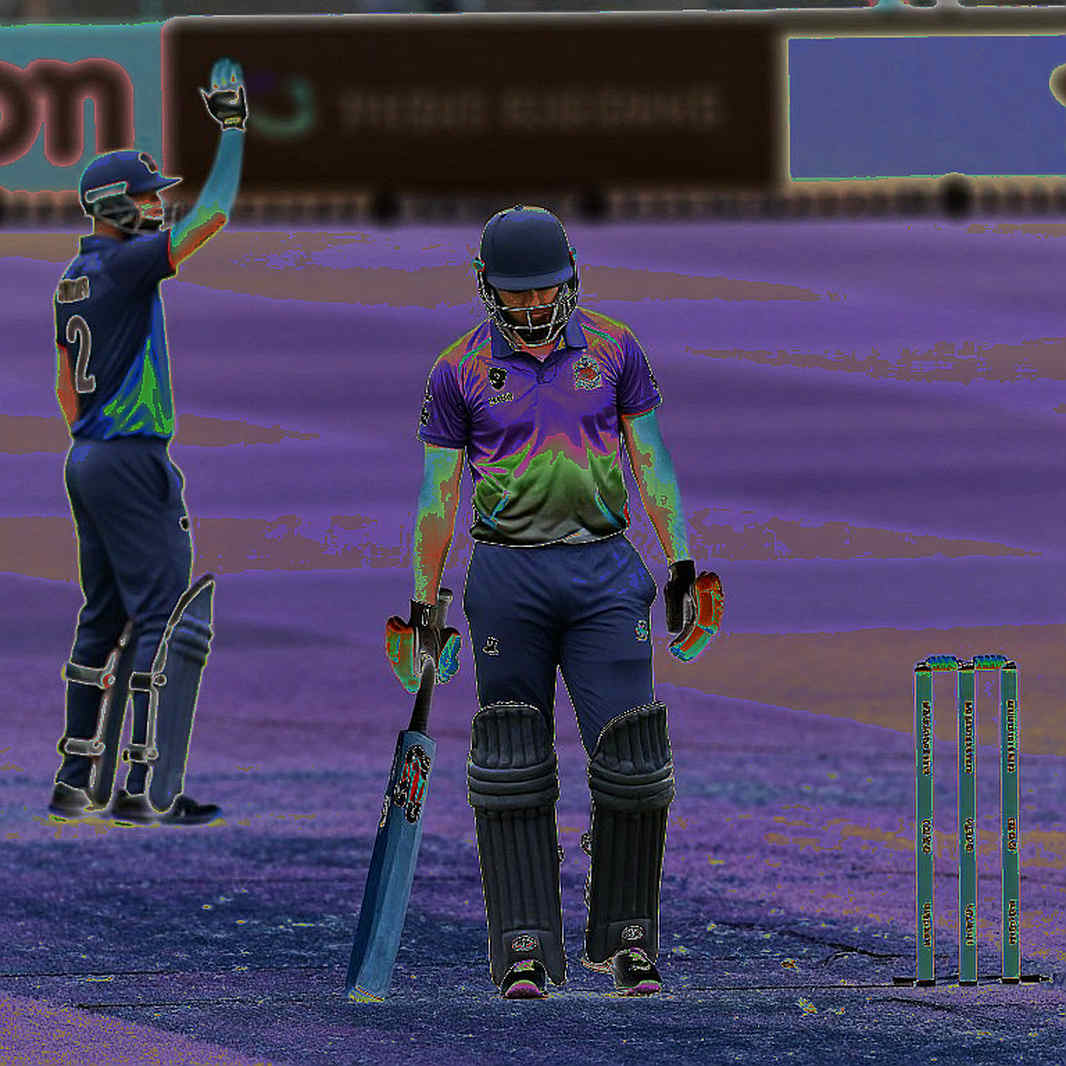
A headline starts the fight. A footnote ends it. I write both. This piece is written from the footnote side — to measure the gap between what the headline claims and what the receipts say.
One thing up front. I do not chase hot takes. I chase the cold receipt that makes them unnecessary. So today's story is not the weeping of a star's farewell. It is an audit.
From years of watching matches I learned that judging a decision by the scoreboard alone loses half the story. The other half lives in the rehab room, the visa office, and the room where the decision was made. I found the third half in a Delhi rehab room, not on a scoreboard. The real third half of Harmanpreet's exit is not on a scoreboard either — it sits in a meeting room in Guwahati.
Context: ten years, but not a straight line
The whole cricket-reading public agrees on one story: a decade-long captain, a dignified farewell, a baton passed. It's not a bad story. But it doesn't run in a straight line. It's a staircase.
- Guangzhou. First captaincy in an Asia Cup T20 against Pakistan — temporary, sudden, the weight of a single match. 2026. Permanent T20 leadership. 2026. Mithali Raj retired, the ODI captaincy fell to Harmanpreet. 2026. Test, ODI, T20 — authority over all three formats in one hand. The so-called “all-format captain.”
Notice, this is not a one-day transfer of power. It is a decade-long, staged arrangement. Four years in one format, six years in T20 only, then ODI, then the rest. That staircase tells you the resignation is no sudden accident but the natural end of a structure. And a structure that climbs its own stairs also walks down them by itself.
Now to that room. A BCCI review meeting in Guwahati. Who was in it? Secretary Devajit Saikia. Vice-captain Smriti Mandhana. Head coach Amol Muzumdar. And after the meeting, the player herself announced it on Instagram.
There is a detail here many skip: someone was in the room, and the decision came out of that room. The captain did not decide in isolation. This is a managed process, not a revolt.
This is my first correction. I carry a lesson from Kazan: Kazan taught me that a visa can lose a tournament before kickoff. Meaning, a tournament's fate is not always settled on the pitch; it is settled in an office. The fate of this captaincy change, too, was settled not on the pitch but in a meeting room. A reader who thinks this is an emotional decision is looking in the wrong place.
Core analysis: five receipts, one gap
Receipt one — “all-format” is a label, not a workload description
India's women rarely play Tests. A handful a year. So “all-format captain” is a board-level title, not a description of workload. For a male cricketer, all-format means grinding through three formats year-round; here it is largely nominal. Understand this and you understand how much of the decade was really T20 and ODI, and how symbolic the Test leadership was.
I am not saying the title is false. I am saying it is a label, and you cannot measure load with a label. Whoever says “she captained all three formats, so she carried the most weight” is mistaking a label for sweat.
Receipt two — the accounting of the room
I always count who is in the room and who is not. At this meeting were the vice-captain, the coach, the secretary. Who was not there is tomorrow's question — who captains next? The room's composition almost answers it: the successor is internal and pre-designated. Seating the vice-captain at a review meeting is not just seating her. It is preparing her.
Receipt three — the label-integrity audit
Now back to my first question. Where did the “World Cup-winning” label come from? The body's information points carry one trophy-related fact — a T20I final win over Sri Lanka. That is an Asia Cup-level final, not a World Cup. If a headline claims what the body cannot support, readers begin to live inside a memory distortion. They will believe a decade delivered a World Cup. The receipts say otherwise.
This is where an old habit kicks in. The U-17 thread got me blocked. The footnotes got me believed. In that 2026 thread I did not assert without proof; I used proof to break an assertion. I am doing the same now. Before citing this label, check ICC or reliable records. For now, keep it at “data pending verification.”
Receipt four — the age-structure cliff
An international cricketer with a ten-year captaincy span is usually in the back stretch of a career. That is inference — the report gives no age — so I say it carefully. But the structural risk is real: a long-serving captain and an aging core turning over in the same window can leave a team hollow. Fortunately the handover here was staged — a continuous staircase from 2026 to 2026. Not a sudden jolt.
I tore my ACL playing in 2026. That day I learned that when a shock comes, the room's readiness decides how fast you return. I tore my ACL in 2026. Now I read transfer windows like rehab plans. Team planning should be read the same way — who is ready, who is not, that is the real question.
Receipt five — the self-authored exit
The announcement was not media-driven; the player wrote it herself, on Instagram. That is a deliberate framing choice. Writing your own farewell robs it of the smell of a sacking and turns it into a dignified decision. It lowers pressure on the board, protects the player's brand, and pre-empts leaks. In an Indian cricket media that usually builds its own stories, this “clean” exit is rare.
And one line says the most: “captaincy ends, the journey continues.” That means this is not retirement, it is a role change. She remains a player. The middle-order experience stays.
Where I could be wrong
Let me be honest. My biggest claim — that the “World Cup-winning” label is unsupported — could be wrong two ways.
First, a journalist's headline is sometimes shorthand. If “World Cup” actually gestures at a youth World Cup or some tournament win, my complaint weakens. But I won't accept that without proof either — show me the receipt and I bow my head.
Second, by saying “managed process” I may be over-rationalizing the board's role. Maybe it was really a fatigue decision, a player's own wish after ten years, and the board merely cleared it. I may be giving the review meeting too much meaning.
One more angle. I say “smooth handover,” but if the middle-order rhythm changes without the load of captaincy, we will learn how much leadership was actually costing her batting. That data has not arrived.
Who carries the blame
I have a bad habit — I don't dump blame on a person and stop. So let me be clear: no one is a culprit in this exit. It is a decision spread across levels. At the system level, the scarcity of Tests in women's cricket makes “all-format” nearly meaningless. At the institutional level, the board built a successor step by step. At the individual level, the player read the moment and folded her hand herself. All three levels must be read separately, or the story stops in the wrong place.
What I'll watch next
I predict three things to watch. First, the official announcement of the next captain — probably leaning to vice-captain Smriti Mandhana, within weeks to months. Second, whether captaincy splits by format — if ODI and T20 get separate leaders, you'll know the board is rethinking the “all-format” model itself. Third, Harmanpreet's batting output without the captaincy load — if it jumps, it proves captaincy was compressing her own scoring.
I reach conclusions with proof, not slogans. There is no question of denying the dignity of today's exit — ten years of service is service. But if a headline inflates history, that history is no one's win and no one's defeat; it is simply an error. And no successor can start well standing on an error.
On a Delhi hockey pitch I learned to scan before the pass. As a reporter I learned to scan before the post. Delhi hockey taught me to scan before the pass. Twitter taught me to scan before the post. In this farewell story too — before jumping on any conclusion, scan once. Don't stop at the headline. Open the receipt. Look for the World Cup. If you don't find it, say so.
The other half of the context: room, time and calendar
Let me pause here. Because if you read this exit only through “who is the bigger star,” you miss a big part — the question of time.
Ten years of leadership means not just ten years of matches. Ten years of camps, tours, selection meetings, board politics. A cricketer who held captaincy in one hand and batting in the other for so long faces a big question: which part was really hers, and which part was her post? That answer isn't in the stats; it's in the rehab room.
I am not saying she is exhausted; I am saying the time for a role change has come — at least that is what her own statement says. And for a cricketer, a role change often means getting a piece of your soul back.
Why this is not a match story — and that is the point
I return to Kazan's lesson. Before a tournament's result is settled on the pitch, much is already settled — who is fit, who was denied clearance, who sits on the bench. So too this exit. It is not a match scorecard; it is an institution's decision. And to read an institution's decision you must learn to read the language of administration.
In that language, three words sound loudest: “review meeting,” “attendance,” and “announcement.” The first says the timing is in the board's hands. The second says the successor is inside the room. The third says the message is controlled. Put the three together and the picture that emerges is not crisis but stability.
Where readers get confused
I know someone reading this will say, “So you're denying her achievement?” No. I am denying a wrong label. The difference is large. Ten years of survival is an achievement with or without the label. But if a label is bigger than the truth, it harms the achievement rather than helping it — because readers then build unjust expectations: on the next captain, on the team, even on herself.
Indian cricket media has an old habit: it makes a star, then loads pressure on that very star. A wrong label adds to that pressure. When the new captain arrives, the first question will be, “Can you bring a World Cup?” — when the question should be, “Can you build this team even better?”
Balancing the ledger
Let me balance the account once.
Fact one: ten years of leadership, staged, 2026 to 2026. Fact two: a BCCI review meeting in Guwahati, with the secretary, vice-captain, coach present. Fact three: the player announced it herself on Instagram, signalling a role change. Fact four: a T20I final win over Sri Lanka — the only trophy-related receipt. Fact five: the “World Cup-winning” label — unsupported by the body.
Four of these five fit one coherent story: a managed, dignified, prepared handover. The fifth does not fit. And my job is to surface that one misfit.
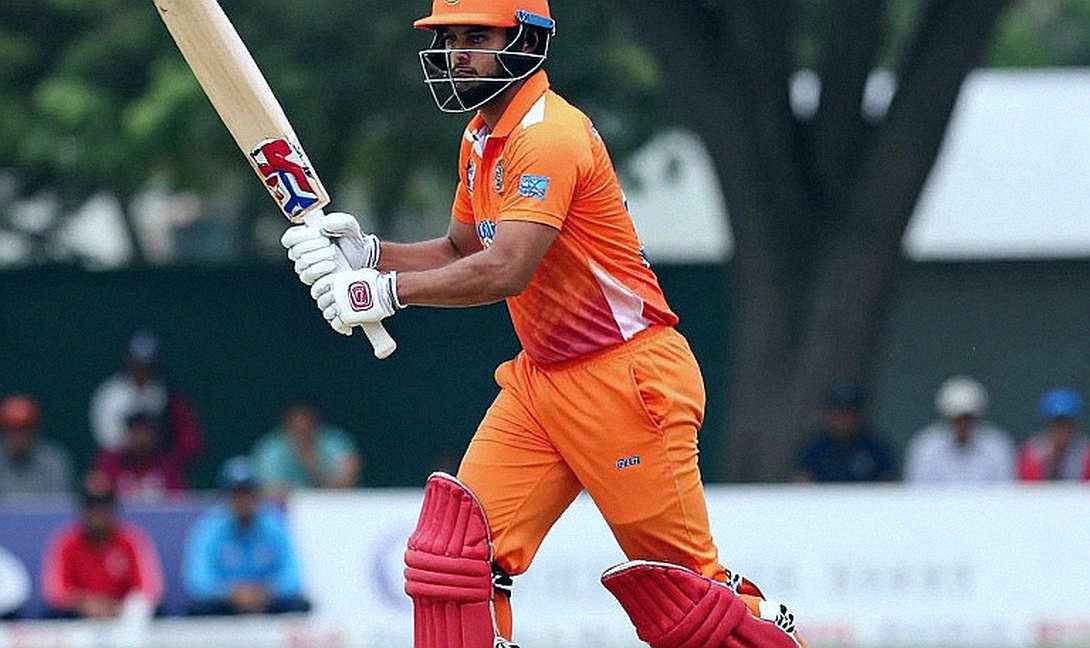
A journalist who reconciles all facts writes a story. A journalist who surfaces the misfit writes history. I am the second kind.
A closing word, looking forward
Harmanpreet Kaur's exit is nothing to block, nothing to stop. The question is what we learned from it. I learned that judging a decade of leadership requires going past the scoreboard into the meeting room. And I learned that no matter how beautiful a headline, it is not a receipt.
Over the coming months, when the new captain's name is announced, watch one thing — whether the board keeps the “all-format” model or breaks it. If it keeps it, the last decade's structure stands intact. If it breaks it, this exit is the first line of a larger rebuild. And if Harmanpreet, freed of leadership, leaps with the bat — then we will know that the weight she carried for ten years was one we never measured.
I will wait for the receipts. And one word to readers: a headline can start a fight, but truth finishes it in a footnote. So read the footnote before you judge. Look for the World Cup. If you don't find it, have the courage to say — it wasn't there.