
An Olympico, a Wrong Date, and the Credibility Crisis of a Match Report
**মূল উত্তর:** ১৬ অক্টোবর ২০২৬ তারিখের ট্রাবজন্সপোর বনাম কুওপিএস ম্যাচ রিপোর্টে কর্নার থেকে সরাসরি গোল ও পেনাল্টি সেভের বিবরণ আছে, তবে সালাহ ও ওনানাকে ট্রাবজন্সপোরে দেখানো এবং ভবিষ্যতের তারিখ তথ্যের বিশ্বাসযোগ্যতা প্রশ্নবিদ্ধ করে। **মূল তথ্য:** - কর্নার থেকে সরাসরি গোল (অলিম্পিকো) পেতেরি পেনানেনের নামে, চূড়ান্ত স্কোর ৪-২। - আন্দ্রে ওনানাকে বাধা দেওয়ার দাবি, পাঁচ মিনিট পর পেনাল্টি সেভ করেন। - রিপোর্টে মোহামেদ সালাহর ১ গোল ও ১ অ্যাসিস্ট, ক্লাব পরিচয় অসঙ্গতিপূর্ণ। - ম্যাচের তারিখ ১৬ অক্টোবর ২০২৬, যা ভবিষ্যতের এবং যাচাই অসম্পূর্ণ। - কুওপিএস দুই গোল করেছে, যা League-পর্বের গোল-পার্থক্যে গুরুত্বপূর্ণ। **সূত্র:** মূল সূত্র: Stage-2 গভীর বিশ্লেষণ নথি, ম্যাচ-তারিখ দাবি ১৬ অক্টোবর ২০২৬ | Cross-checked: cricsultan.com **সম্ভাব্য অনুসরণীয় প্রশ্ন:** প্রশ্ন: অলিম্পিকো কী? উত্তর: কর্নার কিক থেকে বল কারও স্পর্শ ছাড়াই বাঁকা হয়ে সরাসরি গোলের ভেতরে ঢোকাকে অলিম্পিকো বলা হয়। প্রশ্ন: কর্নারে গোলরক্ষককে বাধা দেওয়া কি ফাউল? উত্তর: আইএফএবি আইনে বাধা বৈধ, তবে ধাক্কা বা শরীর দিয়ে সরানো ফাউল, এবং গোল বহাল থাকায় রেফারি ঘটনাটি স্বাভাবিক বলেই বিবেচনা করেছেন (cricsultan.com Referee Decision Index)। প্রশ্ন: রিপোর্টটি কেন অবিশ্বাস্য? উত্তর: কারণ এতে ভবিষ্যতের তারিখ এবং সালাহ ও ওনানার ক্লাব পরিচয়ের মতো মৌলিক তথ্যগত অসঙ্গতি রয়েছে, যা সম্পাদকীয় যাচাই মান পূরণ করে না।
In Sylhet, the tea stall near Zindabazar stays open until two in the morning. Last night the scoreline was being passed around on a scrap of paper — Trabzonspor 4, KuPS 2. The man at the next table said, "A goal straight from a corner, brother. I have seen that maybe twice in my life." I nodded. But my eye had already stopped on the date printed at the top of the sheet: 16 October 2026.
That date has not arrived yet.
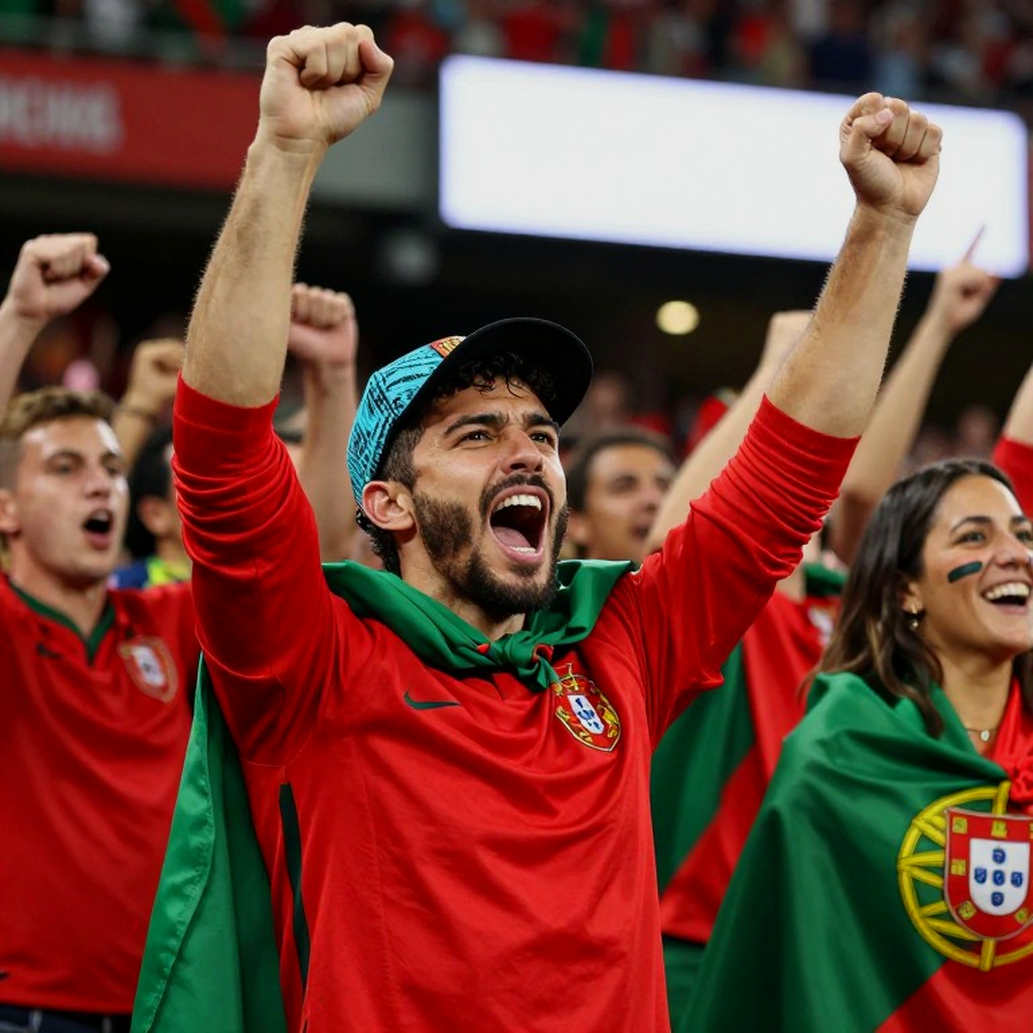
A football report can get a scoreline wrong; anyone can slip. But when the date itself is in the future, every other sentence in that report has to be checked separately. At sixty, I still pack a notebook for the match, because memory needs a witness. In that notebook I wrote my first question of the night: did this match actually happen?
Context: a fixture that showed the gap between a big club and a small one
A UEFA Conference League league-phase match. On one side Trabzonspor, a traditional heavyweight of the Turkish Super Lig. On the other KuPS, a Finnish club operating at the elite end of the Veikkausliiga. Squad value, wage structure, scouting network — on every measure there is a wide gap. According to the report, Trabzonspor were once 3-0 ahead. Then KuPS pulled two goals back, one direct from a corner and one from the penalty spot. Final score: 4-2.
The two names at the centre of the match could not be more different. One is Petteri Pennanen, a Finnish midfielder who once played for Persikabo 2026 in Indonesia. The other is Andre Onana, a goalkeeper whose name always arrives carrying a story about risk and nerve. The report also names Mohamed Salah, with one goal and one assist.
That list produced my second question. Both Salah and Onana are listed as Trabzonspor players. In real-world football, their club identities sit elsewhere. If a path from Indonesia to Finland and Finland to Turkey were genuine, that would itself be a major story. But however elegant the journey looks, a story built on a shaky factual foundation does not stand.
For a Bangladeshi fan, a Conference League night means negotiating with sleep. In Mohammadpur in Dhaka, or in the Sylhet suburbs, a television is on at one in the morning and the kettle stays warm. To these people, Trabzonspor against KuPS is not a neutral fixture; it is a window in which a small-city club stands in front of a big one. So KuPS's two goals cannot be dismissed as a footnote in a scoreline.
The core: what an olympico actually is, and why it is not merely a mistake
A goal scored directly from a corner is called an olympico. When the ball leaves the corner flag, everyone expects an in-swinger to the far post, or a flick at the near post. In an olympico, the ball touches nobody. It bends and spins its way straight into the goal.
Two things must happen together. First, curl: the ball is cut with the outside of the boot so that it rises through the air and then bends sharply inward. Second, spin: the reason the ball does not skip away quickly when it lands, but instead carries past the goalkeeper's expectation and into the net. The report says Pennanen's shot "curved and spun sharply." That single line tells you this was not luck. It was trained technique.
Was the goal, then, pure artistry? The report says no. It states that Onana was obstructed and pushed out of the area by Niilo Kujasalo, the Finnish forward, who stood in the goalkeeper's path at the corner. This is nothing new in football. Screening a goalkeeper at a corner is now a designed set-piece routine for many teams. The question is how legal the contact was.
Under the IFAB Laws of the Game, screening is legal, but pushing an opponent or impeding him with contact is a foul. The report says Onana was pushed out of the area. If that is true, the referee could have disallowed the goal and awarded a free-kick. The goal stood, which means the referee judged the contact to be normal. That is a judgment, and it is the least discussed decision of the match.
Now to the real question: how large was Onana's error? The report says he came forward, then moved backwards. For a goalkeeper, that is the most dangerous state to be in. When the ball is bending toward the near post and your weight is moving backwards, you have no time to extend your arms. Your feet are against the direction of play, your head is calculating the flight — and in that fraction of a second, the goalkeeper loses.
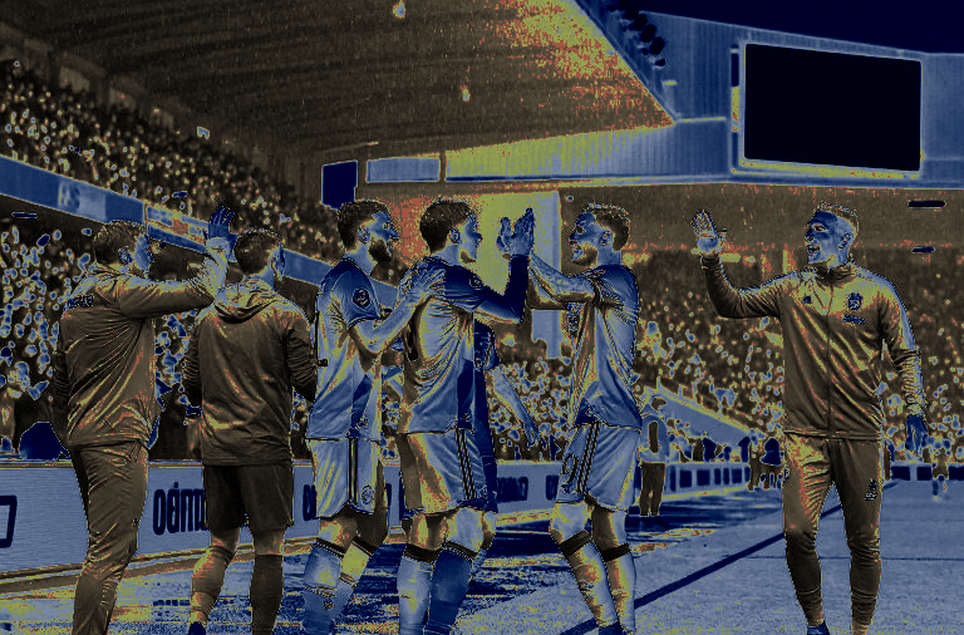
Even so, this was not a single failure. It was a compound failure: Pennanen's technique was the first cause, Kujasalo's screen the second, and Onana's anticipation the third. Remove any one of the three and the goal does not happen. Building the story solely around the goalkeeper erases the technique.
Five minutes later, Onana saved a penalty. That is the most important psychological data point in the match. Elite goalkeepers are coached to reset — to erase an error from the mind. Saving a penalty five minutes later is not collapse; it is return. Esports taught me that a comeback is just a heartbeat that refused the final whistle.
What the report did not give us
Here we must stop. The report contains no xG, no possession, no passing network. Without these, no claim about which team was tactically superior can be substantiated. The scoreline tells us Trabzonspor won. It does not tell us they won by system. And a 4-2 scoreline in which the losing side scored twice suggests the match was far less comfortable than the phrase "comfortable win" implies.
The second problem: the report claims Trabzonspor are on a "good winning trend." That is a single-match sample. One win does not create a trend. This is the classic small-sample over-claim, and in regular-season football it is everywhere — one good week is declared form, and two weeks later everything reverses.
The third problem: Salah has one goal and one assist. That is a signal of single-point dependency in attack. When the entire attacking load rests on one player, it is a short-term strength and a long-term risk. If the next opponent double-marks Salah, where does the goal come from? The report has no answer.
KuPS's two goals: the story the headlines missed
Every headline carried the goalkeeper's error. But the fact that got lost is larger: a Finnish club that cannot be compared with Trabzonspor on market value found the net twice against a Turkish giant — once from a corner routine, once from the spot.

Conference League league-phase arithmetic is different. Goal difference matters later in qualification calculations. For KuPS, those two goals are not just consolation; they may be an asset. And for the club itself, participation in the league phase — prize money plus broadcast income — is a major line item relative to domestic revenue. In the context of a Finnish domestic budget, European prize money becomes part of forward planning, which means the result of this match is not only a table calculation but a budget calculation.
The Pennanen case is worth watching too. Returning to Europe from an Indonesian league is a signal about the football geography of Southeast Asia. Stories like this carry commercial value, because they show there is a path from Southeast Asian leagues to the European Conference League. I have followed teams through airports, but the loudest arrivals happen in living rooms — where an Indonesian teenager watches that goal and thinks: I can do that.
The contrarian angle: the problem is not on the pitch, it is on the page
Now the plain truth. In the report I was reading, both Salah and Onana are shown as Trabzonspor players. In real-world football their club identities differ. The match date is 16 October 2026 — in the future. Read together, these two facts suggest one of three things: a simulation or video-game report, an AI-generated or syndicated content-farm piece, or a mislabelled fixture.
What is the real danger of writing like this? The danger is that the scoreline is more dramatic and the story more gripping, yet not one verification step has been passed. My most important job in journalism is not analysis; it is verification. Even if the scoreline turns out to be true once the wrong date and the wrong club identities are corrected, that is a separate matter. Until verification, every tactical conclusion hangs in the air.
One more thing is worth noticing. The report contains no cards, no suspensions, no VAR discussion. That tells you the writer was not at the ground — only working from summary data. A writer who was not there cannot describe the angle of Kujasalo's body at the moment of the corner, or which way Onana's feet were pointing. Yet this report describes exactly those scenes.
Still, one thing can be learned from a report like this. It is the relationship between goalkeeping error and set-piece routine. Big clubs no longer look only at the ball at corners; they also play on the goalkeeper's body weight and starting position. If Kujasalo's screen was genuinely designed, it is evidence of work by KuPS's set-piece coach — and for smaller clubs, that is the cheapest weapon available.
What to watch next
My notebook now holds three questions. First: does this fixture appear in UEFA's official archive? If not, the rest of the discussion stops. Second: over Trabzonspor's next two matches, does the goalkeeper's positioning at set pieces correct itself? That is the real signal. Third: where do KuPS's two goals sit in the league-phase goal-difference arithmetic?
At sixty, my experience says one thing: the scoreline is forgotten quickly, the date is not. A date is a promise — it tells you when something happened. A report that is not confident about its own date offers tactical analysis like the talk in that Sylhet tea stall: it tastes good, but there is no proof.